

Introduction
Infertility is a growing concern among couples, yet it is often surrounded by misconceptions and stigma. Many still believe that fertility challenges are primarily linked to women, overlooking the equally important role of male reproductive health. This misunderstanding can lead to delayed diagnosis, emotional stress, and ineffective treatment approaches.
In reality, infertility is a shared medical condition that requires equal attention from both partners. By understanding the true causes, debunking common myths, and taking a balanced approach to evaluation and treatment, couples can significantly improve their chances of conception and build a stronger, more supportive journey toward parenthood.
Understanding Infertility: A Shared Challenge
Infertility is often misunderstood, with many couples assuming it is primarily a woman’s problem. In reality, fertility challenges affect both men and women almost equally, yet social stigma and lack of awareness continue to place undue pressure on women. This imbalance can delay proper diagnosis and treatment, making it harder for couples to seek timely help.
Understanding the differences between male and female infertility—and the common myths surrounding them—is essential for making informed decisions. From overlooked male factors to misconceptions about age and lifestyle, many couples unknowingly miss key signs. By addressing these gaps, couples can take a more balanced, proactive approach toward fertility and improve their chances of conception.
The Blame Game: Why Infertility Is Not Just a “Woman’s Issue”
Infertility is often unfairly viewed as a woman’s issue, with societal norms placing the burden of conception solely on female partners. This outdated belief not only fuels stigma but also delays accurate diagnosis and treatment. In reality, infertility is a shared medical condition, and focusing blame on one partner can prevent couples from seeking the right help at the right time.
Medical research shows that male infertility contributes to nearly half of all infertility cases. Factors such as low sperm count, poor sperm motility, hormonal imbalances, and lifestyle habits like smoking, alcohol use, and stress can significantly affect male fertility. Despite this, men are often not evaluated early, leading to missed diagnoses and prolonged uncertainty for couples trying to conceive.
A balanced, informed approach is essential for effective fertility treatment. Both partners should undergo timely evaluation to identify underlying issues and begin appropriate care. By moving away from blame and toward shared responsibility, couples can reduce emotional strain, improve communication, and increase their chances of achieving a healthy pregnancy.
Male Infertility: Causes, Myths, and Missed Diagnoses
Understanding male infertility is essential for couples trying to conceive, as male factors contribute to nearly half of all infertility cases. Yet, awareness remains low, leading to delayed diagnosis and treatment. Here’s a clear breakdown of the key aspects:
Common Causes of Male Infertility
- Low sperm count (oligospermia): Reduced number of sperm affecting chances of fertilization
- Poor sperm motility: Sperm are unable to swim effectively toward the egg
- Abnormal sperm morphology: Irregular shape or structure of sperm
- Hormonal imbalances: Low testosterone or other endocrine issues
- Varicocele: Enlarged veins in the scrotum affecting sperm production
- Lifestyle factors: Smoking, alcohol consumption, obesity, stress, and poor diet
- Infections and medical conditions: STIs, diabetes, or genetic disorders
Common Myths About Male Infertility
Myth: “Infertility is mostly a female problem”
Fact: Male factors are equally common
Myth: “Healthy-looking men are always fertile”
Fact: Fertility cannot be judged by appearance
Myth: “Age doesn’t affect male fertility”
Fact: Sperm quality declines with age
Myth: “Only sexual performance matters”
Fact: Fertility and sexual health are not the same
Myth: “Tight underwear alone causes infertility”
Fact: It may contribute, but isn’t a sole cause
Missed Diagnoses and Overlooked Issues
- Delayed male testing: Focus often placed only on female evaluation first
- Undiagnosed varicocele: A common yet treatable condition
- Hormonal disorders left unchecked: Lack of early screening
- Genetic factors ignored: Especially in severe or unexplained infertility
- Lifestyle-related infertility overlooked: Habits not addressed during treatment
- Incomplete semen analysis: Not repeated or thoroughly interpreted
Addressing male infertility with accurate information and timely evaluation can significantly improve outcomes. A proactive and balanced approach helps couples move closer to successful conception.
Female Infertility Explained: Beyond Age and Hormones
Female infertility is often simplified to age and hormonal changes, but the reality is far more complex. While advancing age can impact egg quality and quantity, many women experience fertility challenges due to a range of underlying medical and lifestyle factors. Focusing only on age can lead to missed diagnoses and delayed treatment, reducing the chances of successful conception.
Several conditions contribute to female infertility beyond hormones. Disorders like Polycystic Ovary Syndrome (PCOS), Endometriosis, and thyroid imbalances can disrupt ovulation and reproductive health. Structural issues such as blocked fallopian tubes, uterine fibroids, or pelvic infections may also prevent fertilization or implantation, even when hormone levels appear normal.
Lifestyle factors play a significant role as well. Stress, poor nutrition, obesity, smoking, and lack of physical activity can all affect ovulation and overall reproductive function. Environmental influences, including exposure to toxins and endocrine-disrupting chemicals, are increasingly recognized as contributors to female infertility.
A comprehensive and early evaluation is key to identifying the root causes of infertility. Rather than focusing solely on age or hormones, a holistic approach that considers medical history, lifestyle, and reproductive health can lead to more accurate diagnosis and effective treatment, improving a woman’s chances of achieving a healthy pregnancy.
Common Misconceptions Couples Have About Fertility
Fertility is often surrounded by myths and misinformation, which can delay timely diagnosis and treatment. Understanding the facts can help couples make informed decisions and improve their chances of conception.
Key Misconceptions
- Infertility is only a woman’s problem
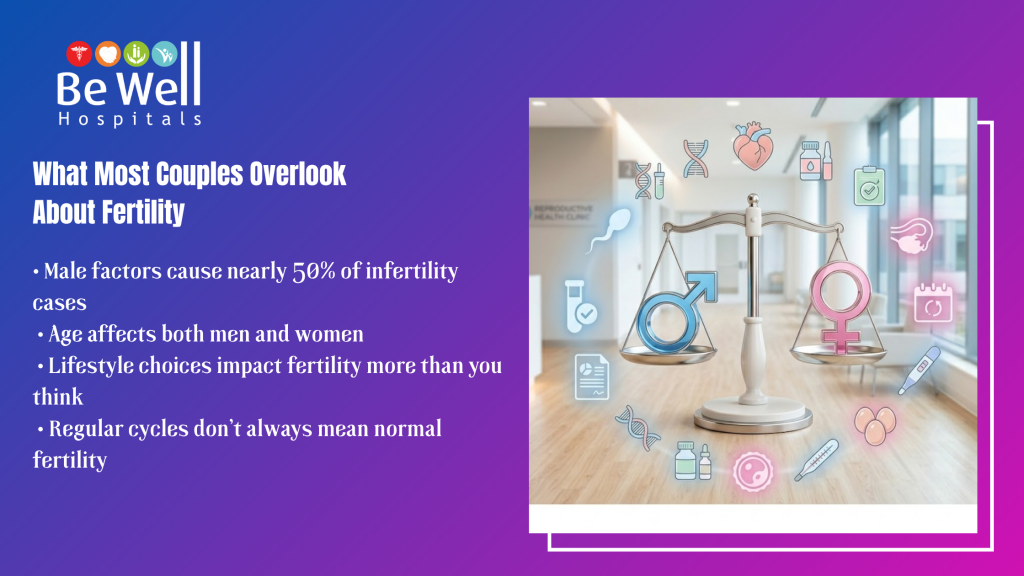
In reality, male factors contribute to nearly half of all infertility cases, making evaluation of both partners essential. - You can get pregnant anytime
Conception is most likely during the fertile window around ovulation, not throughout the entire month. - Age only affects female fertility
While female fertility declines more rapidly, male fertility also decreases with age, affecting sperm quality. - Regular periods mean no fertility issues
Even with regular cycles, conditions like Polycystic Ovary Syndrome or Endometriosis can impact fertility. - Lifestyle doesn’t impact fertility much
Factors like stress, smoking, alcohol use, poor diet, and obesity can significantly affect both male and female fertility. - Fertility treatments always guarantee pregnancy
While treatments improve chances, success depends on age, underlying conditions, and timely intervention. - If you’ve had one child, you won’t face infertility again
Secondary infertility is common and can occur due to age, health changes, or new medical conditions. - Waiting longer won’t make a difference
Delaying evaluation can reduce treatment success rates, especially as fertility naturally declines over time.
By addressing these common fertility misconceptions, couples can take a proactive, informed approach and seek the right care at the right time.
When to Test Both Partners: The Importance of Early Evaluation
Timely fertility testing is crucial for couples trying to conceive, yet many delay evaluation due to assumptions or stigma. A common mistake is focusing only on the female partner, which can lead to incomplete diagnosis and wasted time. Since infertility affects both men and women almost equally, testing both partners early ensures a more accurate understanding of the underlying issues.
Experts generally recommend seeking a fertility evaluation after 12 months of trying to conceive, or after 6 months if the woman is over 35. Early testing can help identify conditions such as Polycystic Ovary Syndrome, Endometriosis, or male factor infertility, allowing for timely intervention.
A proactive approach reduces emotional stress, avoids unnecessary delays, and improves treatment success rates. By evaluating both partners together, couples can move forward with clarity, confidence, and a higher chance of achieving a healthy pregnancy.
Shared Responsibility: How Couples Can Approach Infertility Together
Infertility is not an individual burden but a shared journey that requires understanding, communication, and mutual support. Many couples struggle because of societal pressure and the tendency to assign blame, often placing emotional strain on one partner.
Recognizing that fertility challenges can affect both men and women equally helps create a more supportive environment where decisions are made together. Open conversations, emotional reassurance, and joint participation in medical consultations can strengthen the relationship while navigating fertility concerns.
Taking a team-based approach to infertility also improves outcomes. Couples who undergo evaluation together can identify issues such as Polycystic Ovary Syndrome, Endometriosis, or male factor infertility early and begin appropriate treatment without delay. Adopting healthy lifestyle habits, managing stress, and staying informed about fertility options further enhance the chances of success. By sharing responsibility and supporting each other throughout the process, couples can reduce anxiety, make confident decisions, and move closer to achieving a healthy pregnancy.
Conclusion
Infertility is not a one-sided issue it is a shared medical condition that requires equal awareness, timely evaluation, and mutual support from both partners. Misconceptions, stigma, and delayed diagnosis often stand in the way of effective treatment, reducing the chances of successful conception.
By understanding the realities of both male and female infertility, addressing common myths, and taking a proactive, team-based approach, couples can navigate their fertility journey with clarity and confidence. Early intervention, healthy lifestyle choices, and open communication are key to improving outcomes and achieving the goal of a healthy pregnancy.