

Introduction
Pregnancy is a transformative journey that places unique nutritional demands on the body. What you eat during these nine months not only supports your own well-being but also plays a critical role in your baby’s growth and development. A well-balanced, trimester-wise diet plan ensures that both mother and baby receive essential nutrients at every stage.
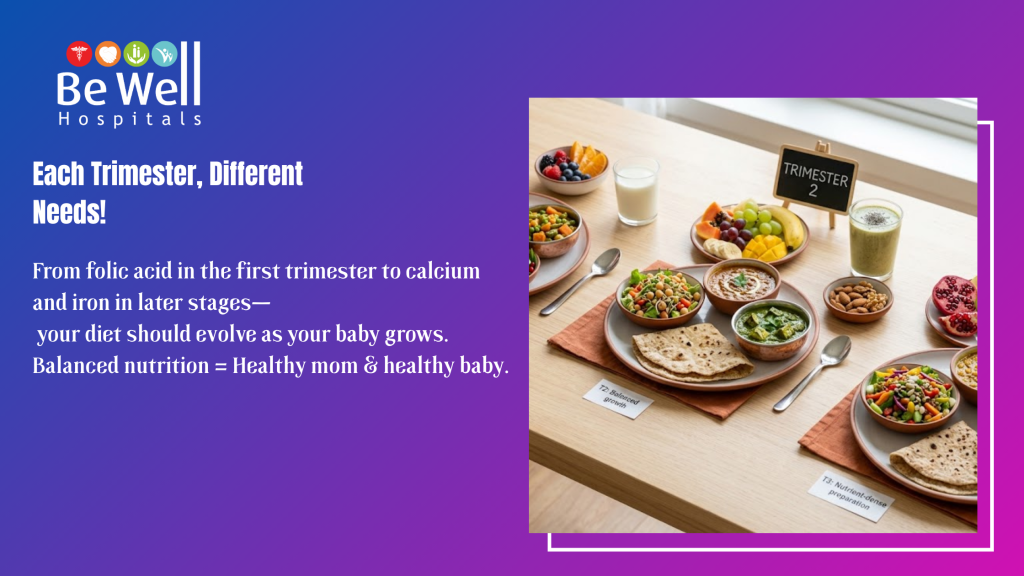
Each trimester brings different physiological changes and nutritional requirements. Understanding what your body needs during these phases can help you make informed dietary choices, manage common discomforts, and promote a healthy pregnancy overall.
Why Nutrition Matters During Pregnancy
A healthy pregnancy diet is not about “eating for two,” but about eating smart. Nutrient-dense foods help in:
- Supporting fetal growth and brain development
- Maintaining maternal energy levels
- Reducing the risk of complications
- Preparing the body for childbirth and recovery
- Key nutrients such as folic acid, iron, calcium, protein, and omega-3 fatty acids become especially important during this time.
First Trimester Diet Plan (Weeks 1–12)
The first trimester is crucial for early fetal development, especially the formation of the brain and spinal cord. However, this stage often comes with nausea, vomiting, and food aversions.
Key Nutritional Focus
- Folic Acid: Essential for preventing neural tube defects
- Vitamin B6: Helps reduce nausea
- Iron: Supports increased blood production
- Hydration: Helps manage fatigue and morning sickness
Foods to Include
- Leafy greens (spinach, fenugreek): Rich in folate
- Citrus fruits (oranges, lemons): Boost vitamin C and hydration
- Whole grains (brown rice, oats): Provide sustained energy
- Nuts and seeds: Good source of healthy fats and protein
- Bananas and dry crackers: Helpful for managing nausea
Sample Daily Diet (First Trimester)
Morning (on waking):
Warm water with lemon or plain crackers
Breakfast:
Vegetable poha or oats porridge with fruits
Mid-morning snack:
A handful of almonds and a fruit
Lunch:
Chapati, dal, vegetable curry, curd, and salad
Evening snack:
Buttermilk or fruit smoothie
Dinner:
Light meal with khichdi or vegetable pulao
Tips for the First Trimester
- Eat small, frequent meals to combat nausea
- Avoid oily and spicy foods if they trigger discomfort
- Stay hydrated with water, coconut water, and soups
Second Trimester Diet Plan (Weeks 13–26)
Often called the “golden period,” the second trimester brings improved appetite and reduced nausea. This is when the baby’s bones, muscles, and organs begin to develop more rapidly.
Key Nutritional Focus
- Protein: Supports tissue growth
- Calcium: Essential for bone and teeth development
- Iron: Prevents anemia
- Fiber: Helps manage constipation
Foods to Include
- Dairy products (milk, paneer, yogurt): Rich in calcium
- Lean proteins (lentils, eggs, chicken): Support fetal growth
- Green vegetables (broccoli, beans): Provide iron and fiber
- Whole grains: Maintain energy levels
- Fruits like apples and guavas: Improve digestion
Sample Daily Diet (Second Trimester)
Morning:
Soaked almonds and a glass of milk
Breakfast:
Whole wheat toast with peanut butter and fruit
Mid-morning snack:
Fresh fruit juice or a fruit bowl
Lunch:
Chapati, dal, paneer/vegetable curry, rice, and salad
Evening snack:
Sprouts chaat or boiled corn
Dinner:
Chapati with vegetable curry and a bowl of soup
Tips for the Second Trimester
- Increase calorie intake moderately (about 300–350 extra calories/day)
- Include iron-rich foods along with vitamin C for better absorption
- Stay active with light physical activity to support digestion
Third Trimester Diet Plan (Weeks 27–40)
The third trimester is a phase of rapid weight gain for the baby. The body prepares for childbirth, and nutritional needs peak during this time.
Key Nutritional Focus
- Iron: Prevents fatigue and supports blood supply
- Calcium and Vitamin D: Strengthen bones
- Omega-3 fatty acids: Support brain development
- Fiber: Prevents constipation
Foods to Include
- Iron-rich foods (beetroot, dates, spinach)
- Healthy fats (walnuts, flaxseeds)
- Protein-rich foods (lentils, tofu, eggs)
- Complex carbohydrates (brown rice, whole wheat bread)
- Hydrating foods (watermelon, cucumber)
Sample Daily Diet (Third Trimester)
Morning:
Warm water with soaked raisins
Breakfast:
Vegetable paratha with curd
Mid-morning snack:
Fruit and coconut water
Lunch:
Chapati, dal, vegetable curry, rice, and salad
Evening snack:
Roasted makhana or nuts
Dinner:
Light meal with soup, chapati, and vegetables
Tips for the Third Trimester
- Eat smaller meals to reduce bloating and heartburn
- Avoid heavy meals late at night
- Stay hydrated to prevent swelling and fatigue
Essential Nutrients Throughout Pregnancy
Regardless of the trimester, certain nutrients remain important throughout:
1. Folic Acid
Supports early development and reduces birth defect risks
2. Iron
Prevents anemia and supports oxygen transport
3. Calcium
Essential for bone health of both mother and baby
4. Protein
Builds tissues and supports growth
5. Omega-3 Fatty Acids
Important for brain and eye development
6. Fiber
Helps maintain digestive health
Foods to Avoid During Pregnancy
To ensure safety, certain foods should be limited or avoided:
- Raw or undercooked meat and eggs
- Unpasteurized dairy products
- Excess caffeine
- Processed and junk foods
- High-mercury fish
Maintaining food hygiene is equally important to prevent infections.
Hydration and Fluids
Fluids play a key role in maintaining amniotic fluid levels and supporting circulation.
Healthy Fluid Options
- Water (8–10 glasses daily)
- Coconut water
- Fresh fruit juices
- Soups and broths
- Avoid sugary drinks and excessive caffeine.
Managing Common Pregnancy Challenges Through Diet
1. Morning Sickness
- Eat dry snacks like crackers
- Avoid strong-smelling foods
2. Constipation
- Increase fiber intake
- Drink plenty of water
3. Heartburn
- Eat smaller meals
- Avoid spicy and fried foods
4. Fatigue
- Include iron-rich foods
- Eat balanced meals regularly
Vegetarian Diet Considerations
A vegetarian pregnancy diet can be equally nutritious with proper planning.
Key Tips
- Combine lentils and grains for complete protein
- Include nuts, seeds, and dairy for essential nutrients
- Consider plant-based iron sources like spinach and legumes
Importance of Portion Control
Even healthy foods should be consumed in balanced portions. Overeating can lead to unnecessary weight gain, while undereating may affect fetal development. Listening to your body’s hunger cues is essential.
Simple Meal Planning Tips
- Plan weekly meals to ensure variety
- Keep healthy snacks handy
- Cook fresh meals whenever possible
- Avoid skipping meals
Conclusion
A trimester-wise diet plan for a healthy pregnancy helps meet the evolving nutritional needs of both mother and baby. By focusing on balanced meals, essential nutrients, and mindful eating habits, you can support optimal growth and development throughout all three stages.
Every pregnancy is unique, so it’s important to listen to your body and make adjustments as needed. With the right dietary choices, you can navigate this journey with confidence, ensuring both your well-being and your baby’s healthy start in life.