

Introduction
Gallstones are a common digestive condition, yet many people are unsure whether they always require surgery. While some cases demand immediate medical attention, others can be safely managed without an operation. Understanding the difference is key to making informed decisions about your health. This blog explores when gallstones need surgical treatment and when a “wait and watch” approach may be appropriate. We’ll break down symptoms, risk factors, and treatment options in a simple, practical way. If you’ve been diagnosed with gallstones or are experiencing related discomfort, this guide will help you understand your options and choose the right course of action with confidence and clarity.
What Are Gallstones and How Do They Form?
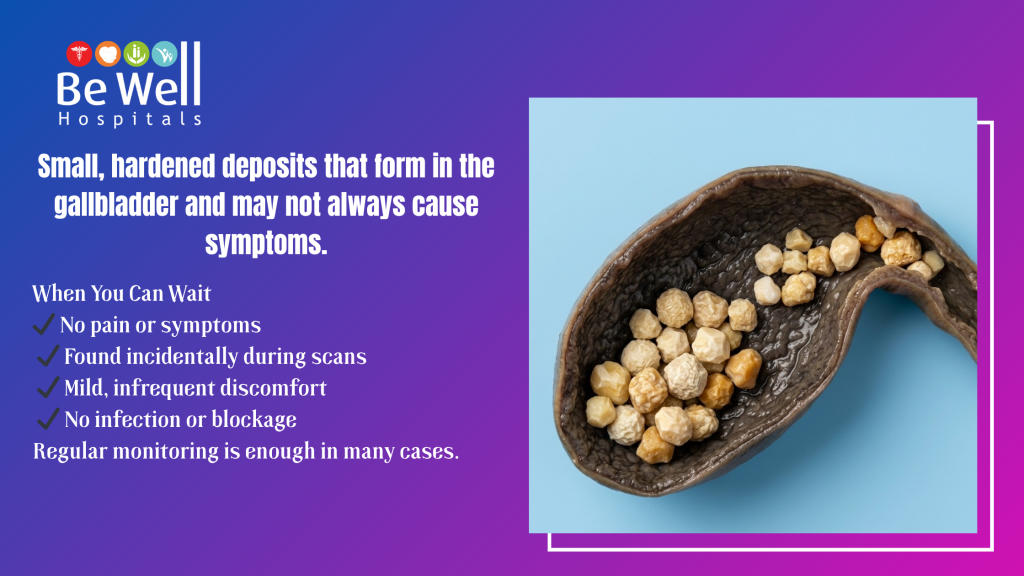
Gallstones are small, hardened deposits that form in the gallbladder, a pear-shaped organ located beneath the liver. The gallbladder stores bile, a digestive fluid that helps break down fats. When the balance of substances in bile—such as cholesterol, bile salts, and bilirubin—is disrupted, it can lead to the formation of gallstones. Many people may have gallstones without even realizing it.
There are two main types of gallstones: cholesterol stones and pigment stones. Cholesterol stones, the most common type, are usually yellow-green and form due to excess cholesterol in bile. Pigment stones, on the other hand, are smaller, darker, and made primarily of bilirubin, often linked to certain medical conditions.
Common causes of gallstones include obesity, rapid weight loss, poor diet, pregnancy, and genetic factors. Understanding how gallstones form can help in early prevention and better management of this condition.
Do All Gallstones Cause Symptoms?
Not all gallstones cause symptoms. In fact, many people have what are known as silent (asymptomatic) gallstones, which do not lead to pain or discomfort and are often discovered incidentally during scans for other conditions. These cases usually do not require immediate treatment and can be safely monitored over time.
However, when gallstones block the bile ducts, they can become symptomatic and lead to noticeable health issues. Common symptoms include: sudden and intense pain in the upper right abdomen, pain that radiates to the back or right shoulder, nausea and vomiting, bloating, indigestion, and discomfort after fatty meals. These episodes are often referred to as gallbladder attacks.
In some cases, symptoms may worsen or lead to complications such as infection or inflammation. Recognizing the difference between silent and symptomatic gallstones is essential for deciding whether medical intervention or simple observation is the right approach.
When Is Surgery Necessary for Gallstones?
Surgery for gallstones is not always the first line of treatment, but it becomes necessary when symptoms are frequent, severe, or lead to complications. The most common procedure, known as Cholecystectomy, involves removing the gallbladder to prevent recurring problems and improve quality of life.
One of the key warning signs that surgery is needed is repeated episodes of intense abdominal pain, often called biliary colic. This pain typically occurs in the upper right abdomen and may spread to the back or shoulder. Other symptoms such as persistent nausea, vomiting, fever, and jaundice (yellowing of the skin and eyes) indicate that the condition may be worsening.
Surgical removal is also recommended in serious medical conditions like Acute Cholecystitis (inflammation of the gallbladder), Pancreatitis, or when gallstones block the bile ducts, leading to infection. These complications can become life-threatening if not treated promptly.
Early consultation with a doctor is crucial when symptoms appear. Timely surgery not only prevents complications but also ensures faster recovery and long-term relief from gallstone-related discomfort.
The key warning signs that indicate gallstones may require surgical treatment:
- Frequent or severe abdominal pain (especially in the upper right abdomen)
- Pain radiating to the back or right shoulder
- Persistent nausea and vomiting
- Fever and chills, suggesting possible infection
- Jaundice (yellowing of the skin and eyes)
- Dark urine and pale stools, indicating bile duct blockage
- Bloating and digestive discomfort after fatty meals
- Sudden, intense episodes of pain (biliary colic) that recur over time
When Can You Safely Wait and Watch?
Not all gallstone cases require immediate surgery. In many individuals, gallstones remain silent and do not cause any symptoms. In such cases, a “wait and watch” approach is often recommended. Regular monitoring and routine check-ups help ensure that the condition does not progress or lead to complications over time.
You can safely delay surgery if the gallstones are not causing pain, infection, or blockage of the bile ducts. Patients with mild, infrequent symptoms that do not interfere with daily life may also be managed conservatively. Doctors may suggest dietary changes, such as reducing fatty foods, maintaining a healthy weight, and staying physically active to prevent symptom flare-ups.
However, it is important to remain alert to any new or worsening symptoms. Sudden abdominal pain, fever, or digestive distress should not be ignored. A timely medical review ensures that if the condition changes, appropriate treatment decisions—including surgery—can be made without delay.
Non-Surgical Management Options for Gallstones
Lifestyle Changes for Managing Gallstones
- Maintain a healthy body weight to reduce cholesterol imbalance in bile
- Avoid rapid weight loss, which can trigger gallstone formation
- Engage in regular physical activity to improve digestion and metabolism
- Manage underlying conditions like diabetes and high cholesterol
- Follow a consistent eating schedule to support proper bile flow
Medications for Gallstones (Non-Surgical Treatment)
- Ursodeoxycholic Acid to gradually dissolve cholesterol gallstones
- Pain relief medications to manage gallbladder attack symptoms
- Antibiotics in case of infection (only under medical supervision)
Medications are typically recommended for small, non-calcified stones and may take months to show results
Dietary Adjustments for Gallstone Prevention and Management
- Eat a low-fat, high-fiber diet to reduce gallbladder strain
- Include whole grains, fruits, vegetables, and lean proteins
- Limit fried, processed, and high-cholesterol foods
- Increase intake of healthy fats (like nuts and olive oil) in moderation
- Stay well-hydrated to support digestion and bile consistency
Risks of Delaying Treatment: When Waiting Can Be Dangerous
Delaying treatment for gallstones may seem harmless, especially when symptoms are mild or occasional. However, ignoring warning signs can lead to serious health complications over time. While some gallstones remain silent, others can suddenly block bile flow and trigger painful or even life-threatening conditions.
One of the most common risks is Acute Cholecystitis, where the gallbladder becomes inflamed due to a blocked duct, causing severe pain, fever, and infection. Gallstones can also migrate and obstruct other parts of the digestive system, leading to Pancreatitis, a serious condition that requires urgent medical care. In some cases, blockage of the bile ducts can result in jaundice and infections such as Cholangitis.
If left untreated, these complications can worsen rapidly and may require emergency surgery instead of a planned, safer procedure. Early diagnosis and timely medical advice are essential to prevent complications, reduce risks, and ensure better long-term outcomes for patients with gallstones.
The risks of delaying treatment for gallstones presented as a clear, SEO-friendly list:
- Severe abdominal pain episodes that become more frequent and intense over time
- Development of Acute Cholecystitis causing pain, fever, and infection
- Increased risk of Pancreatitis, a serious and potentially life-threatening condition
- Blockage of bile ducts leading to jaundice (yellowing of skin and eyes)
- Higher chances of Cholangitis, which requires urgent medical care
- Digestive problems such as bloating, nausea, and intolerance to fatty foods
- Risk of emergency complications requiring urgent surgery instead of planned treatment
- Worsening overall health and longer recovery time if complications develop
Making the Right Choice: Timely Care for Gallstones
Gallstones do not always require surgery, but understanding when to act and when to wait is essential for maintaining good digestive health. While silent gallstones can often be monitored safely, symptomatic cases should never be ignored. Recognizing warning signs early and seeking timely medical advice can help prevent complications and ensure better outcomes.
A balanced approach that includes regular monitoring, healthy lifestyle choices, and medical guidance is key to effective gallstone management. Whether you choose watchful waiting or surgical treatment, informed decision-making plays a crucial role. Always consult a doctor to determine the best course of action for your condition and ensure long-term health and well-being.