
Introduction
Most people experience discomfort during bowel movements at some point in their lives and often assume constipation is the only cause. While hard stools and straining are common reasons, persistent pain during bowel movements can sometimes signal an underlying digestive or colorectal condition that requires medical attention. Symptoms such as bleeding, itching, burning sensations, changes in bowel habits, or a feeling of incomplete bowel emptying should never be ignored.
In this blog, we explore the common causes of painful bowel movements, warning signs to watch for, available treatment options, and practical tips to protect your digestive health.
When Is Pain During Bowel Movements a Cause for Concern?
Experiencing pain during bowel movements occasionally is not uncommon, especially if you are constipated or passing hard stools. Temporary discomfort may occur due to straining, dehydration, or a low-fiber diet. In many cases, the pain resolves once bowel habits improve. However, recurring or severe pain should not be considered normal and may indicate an underlying digestive or colorectal condition that requires medical attention.
Painful bowel movements can be a warning sign of conditions such as hemorrhoids, anal fissures, infections, inflammatory bowel disease (IBD), or other disorders affecting the rectum and anus. If the pain is accompanied by symptoms such as rectal bleeding, mucus in the stool, persistent constipation, diarrhea, unexplained weight loss, or a feeling of incomplete evacuation, it is important to consult a doctor.
Early diagnosis can help prevent complications and ensure appropriate treatment. Paying attention to changes in your bowel habits and seeking medical advice when symptoms persist can play a crucial role in maintaining good digestive and colorectal health.
Common Conditions That Can Cause Painful Bowel Movements
1. Hemorrhoids (Piles)
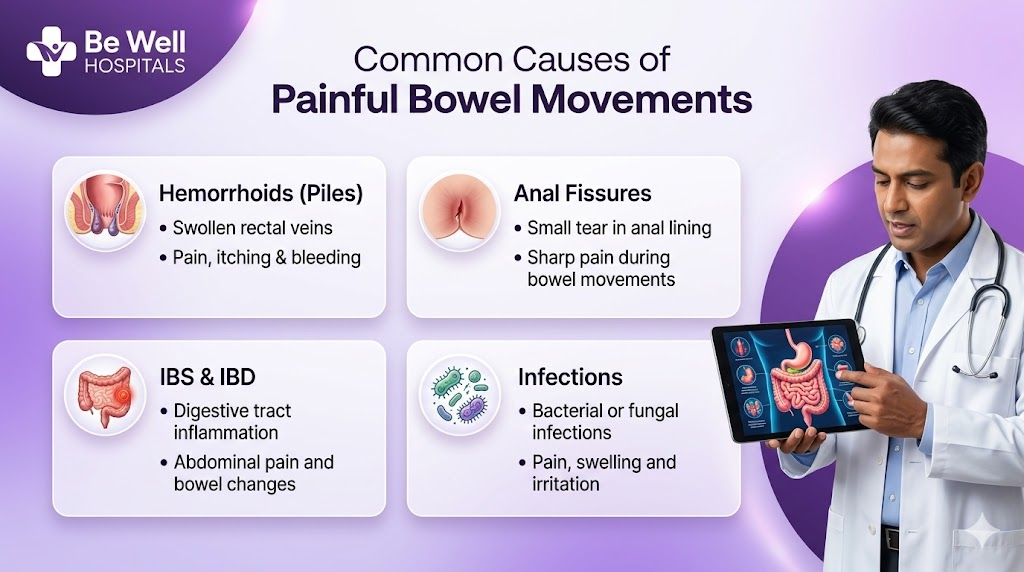
Hemorrhoids are swollen veins in the lower rectum or around the anus that can cause pain, itching, irritation, and bleeding during bowel movements. They often develop due to chronic constipation, prolonged sitting, straining while passing stools, pregnancy, or obesity. External hemorrhoids may be particularly painful, especially if a blood clot forms within them.
Mild cases can improve with dietary changes, increased fiber intake, and proper hydration, while more severe hemorrhoids may require medical treatment to relieve symptoms and prevent complications.
2. Anal Fissures
An anal fissure is a small tear in the lining of the anus that can cause sharp, burning pain during and after bowel movements. It is commonly caused by passing large or hard stools, chronic constipation, or repeated diarrhea. Many people also notice bright red blood on toilet paper or in the stool.
Although fissures can heal on their own, persistent or recurrent fissures may require medical treatment. Early intervention can help reduce pain and promote faster healing.
3. Inflammatory Bowel Disease (IBD)
Inflammatory bowel disease, which includes Crohn’s disease and ulcerative colitis, causes chronic inflammation of the digestive tract. Individuals with IBD may experience painful bowel movements, abdominal cramps, diarrhea, rectal bleeding, fatigue, and weight loss.
The inflammation can affect the rectum and anal region, making bowel movements uncomfortable. Since IBD is a long-term condition, timely diagnosis and proper treatment are essential to control symptoms, reduce flare-ups, and improve overall quality of life.
4. Anal or Rectal Infections
Bacterial, viral, fungal, or sexually transmitted infections can affect the anal and rectal region, leading to pain during bowel movements. These infections may also cause itching, swelling, discharge, redness, and irritation around the anus.
Conditions such as anal abscesses can result in severe pain and may require urgent medical care. Prompt diagnosis and treatment are important to prevent the infection from spreading and ensure complete recovery.
5. Irritable Bowel Syndrome (IBS)
Irritable bowel syndrome is a common digestive disorder that affects bowel function and can cause abdominal pain, bloating, constipation, diarrhea, or a combination of both. During symptom flare-ups, individuals may experience discomfort or pain while passing stools.
Although IBS does not cause structural damage to the intestines, it can significantly affect daily life and digestive health. Managing stress, identifying trigger foods, and following a personalized treatment plan can help control symptoms and improve bowel regularity.
6. Colorectal Polyps and Colorectal Cancer
Although less common, painful bowel movements can sometimes be associated with colorectal polyps or colorectal cancer, particularly when accompanied by rectal bleeding, unexplained weight loss, anemia, or persistent changes in bowel habits.
Tumors in the rectum or lower colon may cause discomfort, obstruction, or a feeling of incomplete bowel emptying. Early detection through screening and medical evaluation is critical, as colorectal cancer is often highly treatable when diagnosed in its initial stages.
Warning Signs You Shouldn’t Ignore
1. Rectal Bleeding
Seeing blood during or after a bowel movement should never be ignored. While hemorrhoids and anal fissures are common causes, rectal bleeding can also be associated with inflammatory bowel disease, colorectal polyps, or colorectal cancer.
2. Persistent or Severe Pain
Pain that is intense, recurring, or lasts for several days requires medical attention and proper evaluation.
3. Changes in Bowel Habits
Chronic constipation, ongoing diarrhea, narrower stools, or alternating bowel patterns may indicate an underlying digestive problem.
4. Unexplained Weight Loss
Unexpected weight loss accompanied by bowel symptoms may signal a serious gastrointestinal condition and should be evaluated promptly.
5. Mucus or Pus in the Stool
This may suggest inflammation, infection, or inflammatory bowel disease and warrants medical consultation.
6. Feeling of Incomplete Bowel Emptying
A persistent sensation of incomplete evacuation may indicate rectal inflammation, hemorrhoids, bowel disorders, or growths within the colon or rectum.
How Doctors Diagnose the Underlying Cause
Diagnosing the cause of painful bowel movements begins with a detailed medical history and physical examination. Doctors may ask about the nature of the pain, bowel habits, diet, constipation, diarrhea, rectal bleeding, and associated symptoms such as weight loss or abdominal discomfort.
Physical Examination
A visual inspection and digital rectal examination may help identify hemorrhoids, fissures, infections, swelling, tenderness, or masses.
Laboratory Tests
- Stool tests for infection, inflammation, and hidden blood.
- Blood tests for anemia, infection, nutritional deficiencies, and inflammatory markers.
Imaging and Endoscopic Procedures
If symptoms persist, doctors may recommend:
- Colonoscopy
- Sigmoidoscopy
- CT Scan
- MRI Scan
These investigations help identify inflammatory bowel disease, colorectal polyps, colorectal cancer, and other digestive disorders.
Treatment Options: From Lifestyle Changes to Medical Care
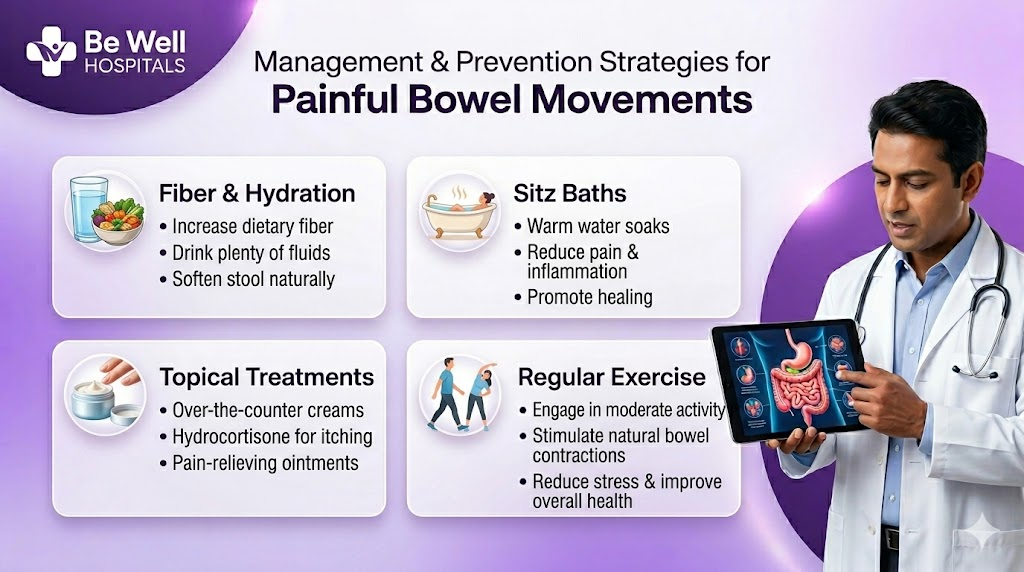
1. Increase Fiber Intake
A diet rich in fruits, vegetables, whole grains, legumes, and seeds helps soften stools, prevent constipation, and reduce straining.
2. Stay Well Hydrated
Adequate water intake helps maintain healthy digestion and prevents stools from becoming hard and difficult to pass.
3. Medications and Topical Treatments
Depending on the diagnosis, treatment may include:
- Stool softeners
- Laxatives
- Anti-inflammatory medications
- Antibiotics
- Medicated creams
4. Lifestyle and Bowel Habit Modifications
- Exercise regularly
- Avoid excessive straining
- Respond promptly to bowel urges
- Limit prolonged sitting on the toilet
5. Treatment for Underlying Digestive Disorders
Conditions such as IBD, IBS, infections, and colorectal disorders require targeted treatment plans and ongoing management.
6. Minimally Invasive Procedures and Surgery
Advanced cases may require:
- Rubber band ligation for hemorrhoids
- Abscess drainage
- Surgical repair of chronic fissures
- Surgery for colorectal polyps or cancer
Tips to Prevent Painful Bowel Movements
1. Eat a Fiber-Rich Diet
Consume fruits, vegetables, whole grains, legumes, nuts, and seeds regularly.
2. Stay Hydrated Throughout the Day
Adequate water intake supports healthy digestion and smooth bowel movements.
3. Exercise Regularly
Physical activity helps stimulate intestinal movement and promotes bowel regularity.
4. Avoid Straining During Bowel Movements
Excessive straining increases the risk of hemorrhoids and anal fissures.
5. Respond to Nature’s Call Promptly
Ignoring the urge to pass stool can lead to constipation and harder stools.
6. Limit Time Spent on the Toilet
Prolonged sitting increases pressure on rectal veins and contributes to hemorrhoids.
7. Practice Good Anal Hygiene
Keep the area clean and dry while avoiding harsh soaps or excessive wiping.
8. Manage Chronic Digestive Conditions
Follow prescribed treatment plans for IBS, IBD, and chronic constipation.
9. Maintain a Healthy Weight
A healthy weight supports better digestive and colorectal health.
10. Schedule Regular Health Check-Ups
Routine evaluations can help detect digestive and colorectal conditions early.
Conclusion
Pain during bowel movements is not always a simple result of constipation. While occasional discomfort may be harmless, persistent pain, rectal bleeding, changes in bowel habits, unexplained weight loss, or other concerning symptoms can indicate an underlying digestive or colorectal condition that requires medical attention.
Understanding the possible causes, recognizing warning signs, and seeking timely medical care can help prevent complications and improve treatment outcomes. By adopting healthy lifestyle habits such as eating a fiber-rich diet, staying hydrated, exercising regularly, and prioritizing digestive health, you can reduce your risk of painful bowel movements and maintain long-term colorectal wellness.
If symptoms persist or worsen, consult a healthcare professional for a thorough evaluation and personalized treatment plan.