
Introduction
Thyroid disorders are among the common health concerns affecting women. The thyroid gland plays an important role in regulating metabolism, energy levels, body temperature, heart rate, mood, and hormonal balance. When the thyroid produces too much or too little hormone, it can affect several body systems and lead to conditions such as hypothyroidism and hyperthyroidism.
Women are more likely to develop thyroid disorders due to hormonal changes during puberty, pregnancy, childbirth, and menopause. Symptoms such as unexplained weight changes, fatigue, irregular periods, hair loss, mood fluctuations, and sleep problems may sometimes be mistaken for stress or normal lifestyle changes. Recognising these symptoms and seeking timely medical evaluation can help with early diagnosis and appropriate treatment.
This article explains the causes, symptoms, diagnostic tests, treatment options, and lifestyle measures that can help women manage thyroid health effectively.
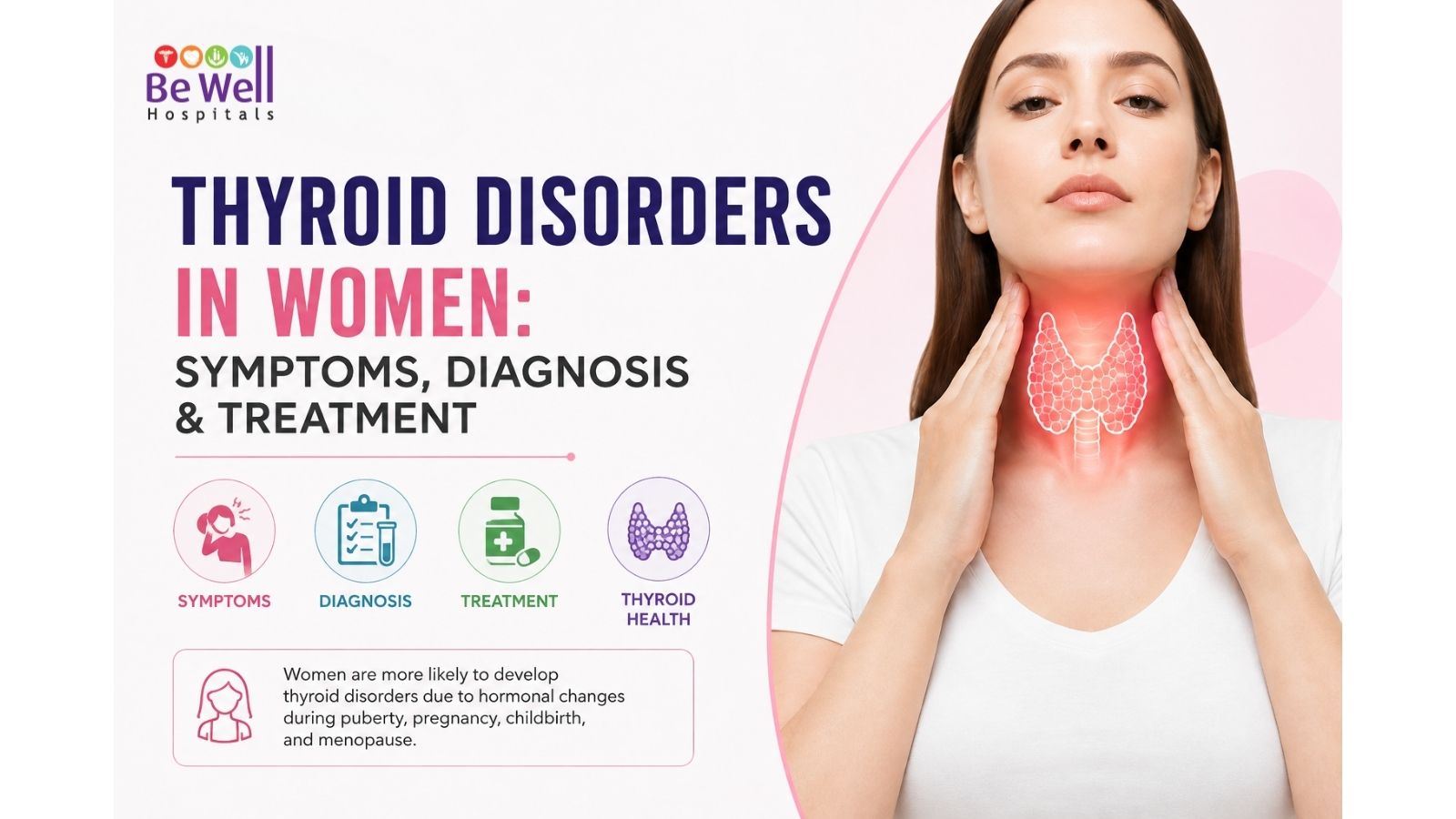
Women are more likely to develop thyroid disorders due to hormonal changes during puberty, pregnancy, childbirth, and menopause.
Understanding Thyroid Disorders: Why Women Are More Affected
The thyroid gland is a small, butterfly-shaped gland located in the neck that plays a major role in maintaining the body’s overall balance. It produces thyroid hormones that regulate metabolism, energy levels, heart rate, body temperature, digestion, and brain function. When the thyroid gland does not produce the right amount of hormones, it can affect several body systems and lead to thyroid disorders.
The two most common thyroid conditions are hypothyroidism and hyperthyroidism.
Hypothyroidism
Hypothyroidism occurs when the thyroid gland produces insufficient hormones, causing symptoms such as fatigue, weight gain, dry skin, constipation, and sensitivity to cold.
Hyperthyroidism
Hyperthyroidism occurs when the thyroid produces excessive hormones, leading to weight loss, rapid heartbeat, anxiety, sweating, and difficulty sleeping.
Women are more likely to develop thyroid disorders due to hormonal changes during puberty, pregnancy, childbirth, and menopause. Autoimmune conditions, such as Hashimoto’s thyroiditis and Graves’ disease, are also more common in women and can affect thyroid function. Early diagnosis and proper treatment can help manage symptoms and support long-term health.
Common Symptoms of Thyroid Disorders in Women You Should Not Ignore
Thyroid disorders can develop gradually, and many symptoms may appear similar to common health concerns such as stress, ageing, or lifestyle changes. Recognising the early signs can help women seek timely medical advice and prevent complications.
Some common symptoms of thyroid problems include:
1. Unexplained Weight Changes
Sudden weight gain despite a healthy diet and regular activity may indicate an underactive thyroid (hypothyroidism). On the other hand, unexpected weight loss, even with a normal or increased appetite, can be a sign of an overactive thyroid (hyperthyroidism).
2. Persistent Fatigue and Low Energy
Feeling unusually tired, weak, or exhausted even after adequate rest is a common symptom of thyroid imbalance. Low thyroid hormone levels can slow the body’s functions, leading to reduced energy and difficulty performing daily activities.
3. Changes in Menstrual Cycle
Thyroid hormones influence reproductive health. Women with thyroid disorders may experience irregular periods, heavier or lighter menstrual bleeding, or changes in cycle patterns due to hormonal imbalance.
4. Hair Loss and Skin Changes
Thyroid problems can affect hair growth and skin health. Women may notice excessive hair fall, thinning hair, dry skin, brittle nails, or changes in skin texture due to altered hormone levels.
5. Mood Swings and Emotional Changes
Thyroid disorders can impact mental health. Hypothyroidism may cause low mood, depression, and difficulty concentrating, while hyperthyroidism may lead to anxiety, irritability, nervousness, or restlessness.
6. Sleep Problems
Difficulty falling asleep, frequent waking, or feeling excessively sleepy during the day can be linked to thyroid hormone imbalance. An overactive thyroid may cause insomnia, while an underactive thyroid can increase tiredness and sleepiness.
7. Changes in Heart Rate
An increased heart rate, palpitations, or a feeling of the heart racing may occur with hyperthyroidism. Hypothyroidism, in contrast, can cause a slower heart rate and reduced circulation.
8. Increased Sensitivity to Temperature
Women with thyroid disorders may experience unusual sensitivity to temperature. Feeling cold even in normal conditions may indicate hypothyroidism, while excessive sweating and heat intolerance can be linked to hyperthyroidism.
9. Neck Swelling or Enlarged Thyroid Gland
A visible swelling or lump in the neck may indicate an enlarged thyroid gland (goitre). Any unusual changes in the neck area should be evaluated by a doctor.
10. Difficulty Concentrating or Memory Problems
Thyroid hormone imbalance can affect brain function, leading to problems with focus, forgetfulness, or a feeling of mental sluggishness.
Recognising these symptoms early and consulting a doctor for proper evaluation can help diagnose thyroid disorders and begin appropriate treatment for better health outcomes.

How Are Thyroid Disorders Diagnosed? Tests and Evaluations Explained
Diagnosing a thyroid disorder typically involves reviewing symptoms and medical history along with blood tests and, when required, imaging or other diagnostic procedures.
1. Medical History and Physical Examination
Doctors review symptoms, family history, medications, and examine the neck for thyroid enlargement or abnormalities.
2. Thyroid-Stimulating Hormone (TSH) Test
A blood test measuring TSH levels helps determine whether the thyroid is underactive or overactive.
3. T3 and T4 Hormone Tests
These blood tests measure thyroid hormone levels and help evaluate how well the thyroid gland is functioning.
4. Thyroid Antibody Tests
These tests detect antibodies linked to autoimmune thyroid conditions like Hashimoto’s thyroiditis and Graves’ disease.
5. Thyroid Ultrasound
An ultrasound creates images of the thyroid gland to identify nodules, swelling, cysts, or structural changes.
6. Radioactive Iodine Uptake Test
This test measures how much iodine the thyroid absorbs, helping diagnose causes of hyperthyroidism.
7. Thyroid Scan
A thyroid scan provides detailed images showing the size, shape, and activity levels of the gland.
8. Fine Needle Aspiration (FNA) Biopsy
Doctors use a thin needle to collect thyroid tissue samples and check suspicious nodules for abnormalities.
9. Regular Monitoring and Follow-Up Tests
Ongoing blood tests help track thyroid hormone levels and ensure treatment remains effective over time.
Treatment Options for Thyroid Disorders in Women
The treatment for thyroid disorders depends on the type of condition, hormone levels, symptoms, and overall health of the individual. With proper diagnosis and regular monitoring, most thyroid conditions can be effectively managed.
Common treatment options include:
1. Thyroid Hormone Replacement Therapy
For women with hypothyroidism, doctors often prescribe synthetic thyroid hormones to replace the hormones that the thyroid gland cannot produce adequately. Regular blood tests help adjust the dosage and maintain healthy hormone levels.
2. Medications to Control Hyperthyroidism
Women with an overactive thyroid may be prescribed anti-thyroid medications that reduce excessive hormone production. These medicines help control symptoms such as rapid heartbeat, anxiety, sweating, and unexplained weight loss.
3. Radioactive Iodine Therapy
Radioactive iodine therapy is a commonly used treatment for hyperthyroidism. It helps reduce the activity of an overactive thyroid gland by gradually destroying overactive thyroid cells.
4. Surgery for Thyroid Conditions
In some cases, surgery may be recommended to remove part or all of the thyroid gland. This may be needed for large goitres, suspicious nodules, or certain thyroid cancers.
5. Beta-Blocker Medications for Symptom Relief
Doctors may prescribe beta-blockers to manage symptoms of hyperthyroidism, such as rapid heartbeat, tremors, and anxiety, while other treatments address the underlying thyroid problem.
6. Lifestyle Changes and Nutritional Support
A balanced diet, regular exercise, stress management, and adequate sleep can support thyroid health. Nutrients like iodine, selenium, and zinc play important roles in thyroid function.
7. Regular Monitoring and Follow-Up Care
Thyroid disorders require ongoing monitoring to ensure treatment effectiveness. Regular thyroid function tests help doctors adjust medications and prevent complications.
8. Special Care During Pregnancy
Women with thyroid disorders require careful monitoring during pregnancy, as thyroid hormones are essential for both maternal health and the baby’s development. Treatment plans may be adjusted accordingly.
With early diagnosis, appropriate treatment, and regular medical follow-up, women with thyroid disorders can maintain healthy hormone levels and lead active, fulfilling lives.
Managing Thyroid Health: Diet, Lifestyle Changes and Regular Monitoring
Managing thyroid health requires a combination of medical care, healthy lifestyle choices, and regular monitoring. While medications play an important role in controlling thyroid disorders, daily habits can support better hormone balance and overall well-being.
Women with thyroid conditions should follow their doctor’s advice, take prescribed medications regularly, and avoid making sudden changes to their treatment plan.
Maintain a Balanced Diet
A balanced diet can support proper thyroid function and overall health. Nutrients such as iodine, selenium, zinc, iron, and vitamin D are important for thyroid hormone production and metabolism.
Including foods such as vegetables, fruits, whole grains, lean proteins, nuts, and healthy fats can help maintain nutritional balance. Women should also discuss any dietary supplements with their doctor before use.
Stay Physically Active
Regular physical activity can help manage symptoms associated with thyroid disorders, such as fatigue, weight changes, and mood fluctuations.
Manage Stress and Get Adequate Sleep
Exercise, stress management techniques, adequate sleep, and relaxation practices can improve energy levels and support hormonal health.
Follow Regular Monitoring and Medical Care
Regular thyroid function tests and follow-up appointments are essential for effective thyroid management. Monitoring hormone levels helps doctors adjust medications and prevent complications.
With timely treatment, healthy lifestyle choices, and consistent medical care, women with thyroid disorders can maintain better health and quality of life.
Take Control of Your Thyroid Health with Early Care
Thyroid disorders are common among women but can be effectively managed with early diagnosis, appropriate treatment, and healthy lifestyle choices. Recognising symptoms such as unexplained weight changes, fatigue, mood fluctuations, and menstrual irregularities can help women seek timely medical advice.
Regular thyroid tests, medication adherence, balanced nutrition, and routine follow-ups play an important role in maintaining hormone balance. Since thyroid health affects several body functions, women should not ignore persistent symptoms.
Conclusion
Thyroid health plays an important role in a woman’s overall physical and emotional well-being. Changes in thyroid hormone levels can affect metabolism, energy, menstrual health, mood, sleep, heart rate, and several other body functions.
Although symptoms can sometimes be subtle or mistaken for everyday stress and lifestyle changes, timely evaluation can help identify thyroid disorders early. Proper diagnosis, appropriate treatment, healthy lifestyle habits, and regular follow-up can help women effectively manage thyroid conditions.
If you experience persistent symptoms such as unexplained weight changes, fatigue, irregular periods, hair loss, mood changes, temperature sensitivity, or neck swelling, consult a qualified healthcare professional for appropriate evaluation. With proper care and medical guidance, thyroid disorders can be controlled, allowing women to lead active, healthy, and fulfilling lives.