
Introduction
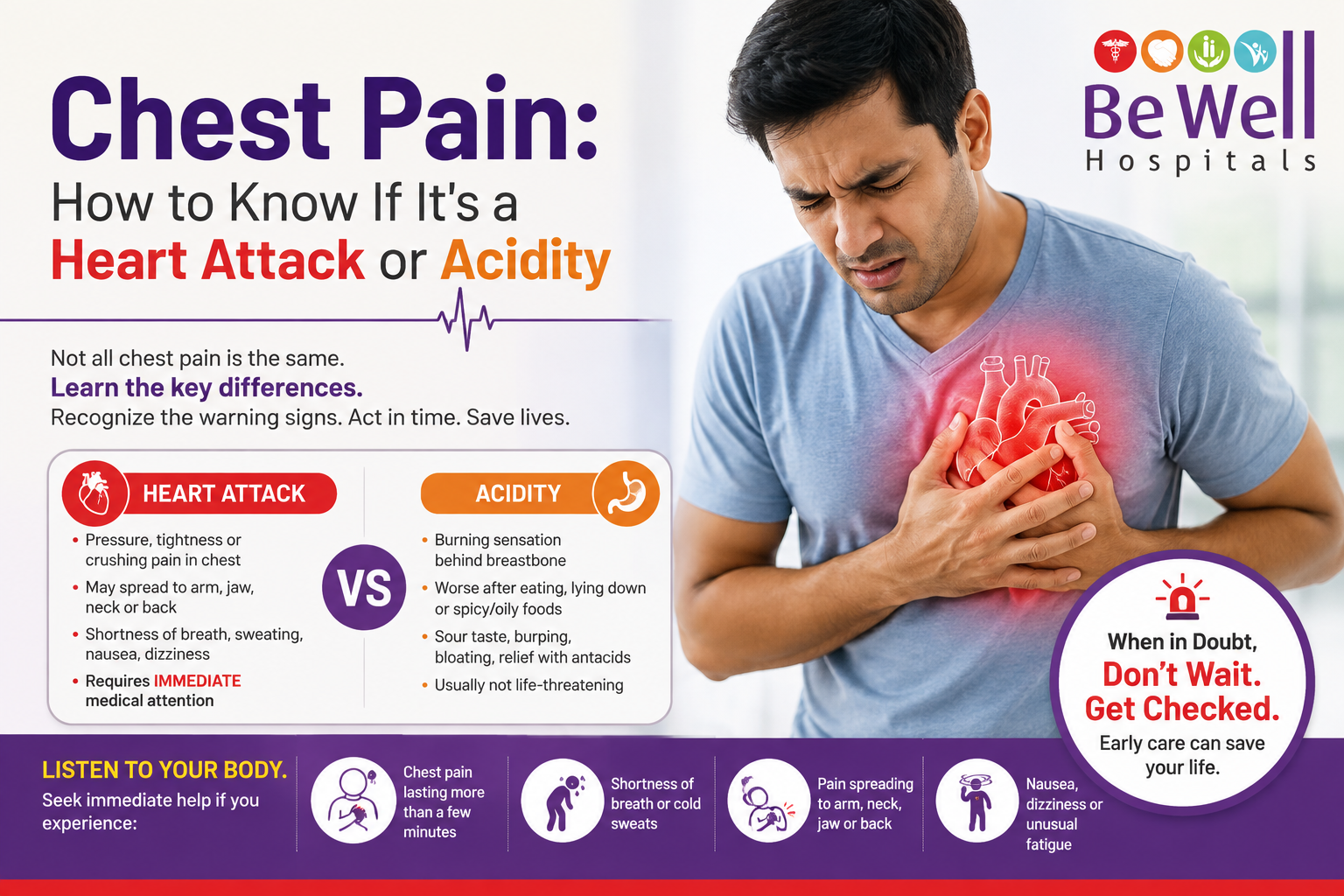
A heart attack and acidity can both cause chest discomfort, making it difficult to tell the difference.
Chest pain can be frightening, but it does not always mean you are having a heart attack. In many cases, it may be caused by acidity or acid reflux, which can produce a burning sensation that feels similar to heart-related discomfort. Because the symptoms can overlap, it is important to understand the differences. Recognizing the warning signs early can help you make the right decision and avoid unnecessary delays in seeking treatment.
Knowing whether your chest pain is due to a heart attack or acidity could save your life. While acidity often improves with lifestyle changes or medication, a heart attack is a medical emergency that requires immediate care. In this blog, we explain the key differences between the two conditions, the symptoms to watch for, when to seek emergency medical attention, and how doctors diagnose the cause of chest pain.
Why Chest Pain Should Never Be Ignored
Chest pain is one of the most common symptoms that leads people to seek medical care. While it may sometimes be caused by harmless conditions such as acidity, muscle strain, or indigestion, it can also be an early warning sign of a serious heart problem. Because the causes of chest pain vary widely, it is never safe to assume that the discomfort will go away on its own. Prompt evaluation can help identify the underlying cause and prevent complications.
One of the biggest dangers is mistaking the symptoms of a heart attack for acidity. Many people delay seeking medical attention because they believe the pain is due to gas or heartburn. During a heart attack, every minute counts. Early diagnosis and treatment can restore blood flow to the heart, reduce damage to the heart muscle, and significantly improve the chances of recovery.
Even if chest pain turns out to be non-cardiac, persistent, severe, or recurring discomfort should always be assessed by a doctor. Paying attention to accompanying symptoms such as shortness of breath, sweating, nausea, dizziness, or pain spreading to the arm, jaw, neck, or back can help doctors make an accurate diagnosis. When it comes to chest pain, it is always better to be cautious than to ignore a potentially life-threatening condition.
Heart Attack vs. Acidity: Understanding the Key Differences
A heart attack and acidity can both cause chest discomfort, making it difficult to tell the difference. However, the underlying causes are very different. A heart attack occurs when blood flow to the heart muscle is blocked, depriving it of oxygen and causing damage. Acidity, also known as acid reflux or heartburn, happens when stomach acid flows back into the food pipe, creating a burning sensation in the chest.
Knowing the difference between these conditions is essential because a heart attack requires immediate emergency treatment, while acidity is usually managed with medication and lifestyle changes.
The nature of the pain often provides important clues. Heart attack pain is typically described as a heavy pressure, squeezing, tightness, or crushing sensation in the center or left side of the chest. It may spread to the left arm, shoulder, neck, jaw, or back and usually lasts for several minutes or comes and goes. In contrast, acidity often causes a burning feeling behind the breastbone that may worsen after eating, while lying down, or after consuming spicy, oily, or acidic foods.
Associated symptoms can also help distinguish between the two. A heart attack is often accompanied by shortness of breath, cold sweats, nausea, vomiting, dizziness, unusual fatigue, or a feeling of impending doom. Acidity is more likely to cause a sour or bitter taste in the mouth, frequent burping, bloating, and relief after taking antacids. However, not everyone experiences the classic symptoms of a heart attack. Women, older adults, and people with diabetes may have mild or unusual symptoms, making diagnosis more challenging.
If you are unsure whether your chest pain is caused by a heart attack or acidity, never take the risk of self-diagnosing. Seek immediate medical attention, especially if the pain is severe, persistent, or associated with breathing difficulty, sweating, or pain radiating to other parts of the body. Early diagnosis through an ECG, blood tests, and clinical evaluation can help doctors identify the cause quickly and ensure you receive the right treatment without delay.
Warning Signs That Point to a Heart Attack
1. Persistent Chest Pressure or Tightness
Heavy, squeezing chest pain lasting several minutes may indicate a heart attack requiring immediate emergency medical care.
2. Pain Spreading to the Arm
Chest pain radiating to the left or both arms is a classic heart attack warning sign.
3. Jaw, Neck, Shoulder, or Back Pain
Discomfort extending beyond the chest often signals reduced blood flow to the heart muscle.
4. Shortness of Breath
Difficulty breathing with or without chest pain may indicate a developing heart attack or cardiac emergency.
5. Cold Sweats
Sudden, unexplained cold sweating accompanied by chest discomfort is a common heart attack symptom.
6. Nausea or Vomiting
Feeling sick, vomiting, or indigestion-like symptoms can sometimes indicate a heart attack, especially in women.
7. Dizziness or Lightheadedness
Feeling faint, weak, or dizzy alongside chest pain requires immediate medical evaluation and prompt treatment.
8. Unusual Fatigue
Extreme, unexplained tiredness before or during chest discomfort may be an early heart attack warning sign.
9. Rapid or Irregular Heartbeat
Palpitations with chest pain, breathlessness, or dizziness could signal a serious heart-related emergency.
10. Symptoms Lasting More Than 10 Minutes
Chest pain persisting beyond ten minutes should never be ignored and needs urgent medical attention.
Symptoms That Suggest Acidity or Acid Reflux
1. Burning Sensation in the Chest (Heartburn)
A burning pain behind the breastbone, especially after meals, is the most common symptom of acid reflux.
2. Sour or Bitter Taste in the Mouth
Stomach acid flowing back into the throat can leave a sour, bitter taste, particularly after lying down.
3. Pain After Eating
Chest discomfort that develops after consuming spicy, oily, or heavy meals often points to acidity rather than heart disease.
4. Frequent Burping or Belching
Excessive burping accompanied by bloating and chest discomfort commonly occurs due to acid reflux and indigestion.
5. Acid Regurgitation
A sensation of stomach contents or acid rising into the throat is a classic sign of gastroesophageal reflux.
6. Bloating and Fullness
Feeling unusually full or bloated after meals can accompany acidity and worsen symptoms of acid reflux.
7. Symptoms Worsen When Lying Down
Acid reflux often becomes more noticeable when lying flat or bending forward after eating a meal.
8. Relief After Taking Antacids
Chest discomfort caused by acidity usually improves after taking antacids or acid-reducing medications recommended by a doctor.
9. Chronic Cough or Hoarseness
Repeated acid reflux can irritate the throat, causing a persistent cough, hoarse voice, or frequent throat clearing.
10. Difficulty Swallowing
Long-term acid reflux may cause irritation or narrowing of the food pipe, making swallowing uncomfortable or difficult.
When Should You Seek Emergency Medical Care?
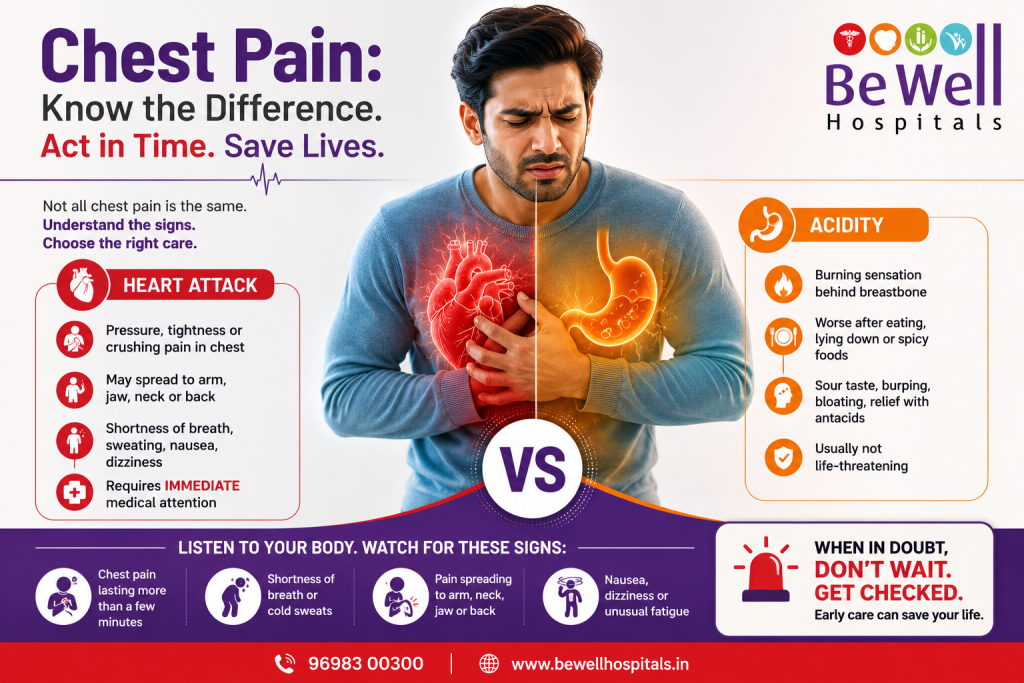
Never ignore chest pain that is severe, sudden, or lasts for more than a few minutes. While acidity can cause discomfort, persistent chest pain may be a sign of a heart attack or another serious heart condition. If the pain feels like pressure, tightness, heaviness, or squeezing, do not wait to see if it improves. Seeking immediate medical attention can make a significant difference in protecting your heart and improving recovery.
You should also seek emergency medical care if chest pain is accompanied by shortness of breath, cold sweats, nausea, vomiting, dizziness, fainting, or pain spreading to the left arm, both arms, jaw, neck, shoulders, or back. These symptoms are common warning signs of a heart attack and require urgent evaluation. Delaying treatment can increase the risk of permanent heart muscle damage and life-threatening complications.
If you are unsure whether your chest pain is caused by a heart attack or acidity, always choose caution and get evaluated immediately. Do not attempt to diagnose yourself or rely only on antacids for relief. Early diagnosis through an ECG, blood tests, and a medical examination can quickly identify the cause of chest pain and ensure you receive the right treatment without delay.
How Doctors Diagnose the Cause of Chest Pain
Diagnosing the cause of chest pain begins with a detailed medical history and physical examination. Your doctor will ask about the location, intensity, duration, and nature of the pain, along with any associated symptoms such as shortness of breath, nausea, sweating, or dizziness. They will also consider your age, medical history, lifestyle, and risk factors for heart disease. To rule out a heart attack, doctors may recommend an electrocardiogram (ECG), blood tests to detect heart muscle damage, a chest X-ray, or an echocardiogram.
If the initial tests do not suggest a heart problem, further investigations may be performed to identify other causes, including acidity or acid reflux. These may include stress tests, CT coronary angiography, upper gastrointestinal endoscopy, or other imaging studies, depending on your symptoms. An accurate diagnosis is essential because the treatment for chest pain caused by a heart attack differs greatly from the treatment for acidity. Early evaluation ensures timely care, reduces complications, and provides peace of mind.
Don’t Ignore Chest Pain—Get the Right Diagnosis
Chest pain should never be dismissed or self-diagnosed, as it can be a symptom of either a harmless digestive issue or a life-threatening heart attack. While acidity and acid reflux often improve with lifestyle changes or medication, heart-related chest pain requires immediate medical attention. Understanding the differences between heart attack symptoms and acidity symptoms can help you act quickly when every minute matters.
If you experience persistent, severe, or unexplained chest pain, consult a doctor without delay. Early diagnosis, timely treatment, and regular heart health check-ups are the best ways to protect your heart and ensure long-term well-being.
Conclusion
Chest pain can have several causes, and distinguishing between acidity and a heart attack is not always easy based on symptoms alone. While certain symptoms may provide clues, chest pain that is severe, persistent, sudden, or accompanied by warning signs should never be ignored.
When in doubt, seek immediate medical evaluation rather than attempting to self-diagnose. Prompt diagnosis and timely treatment can make a critical difference in protecting your heart and overall health.