
Introduction
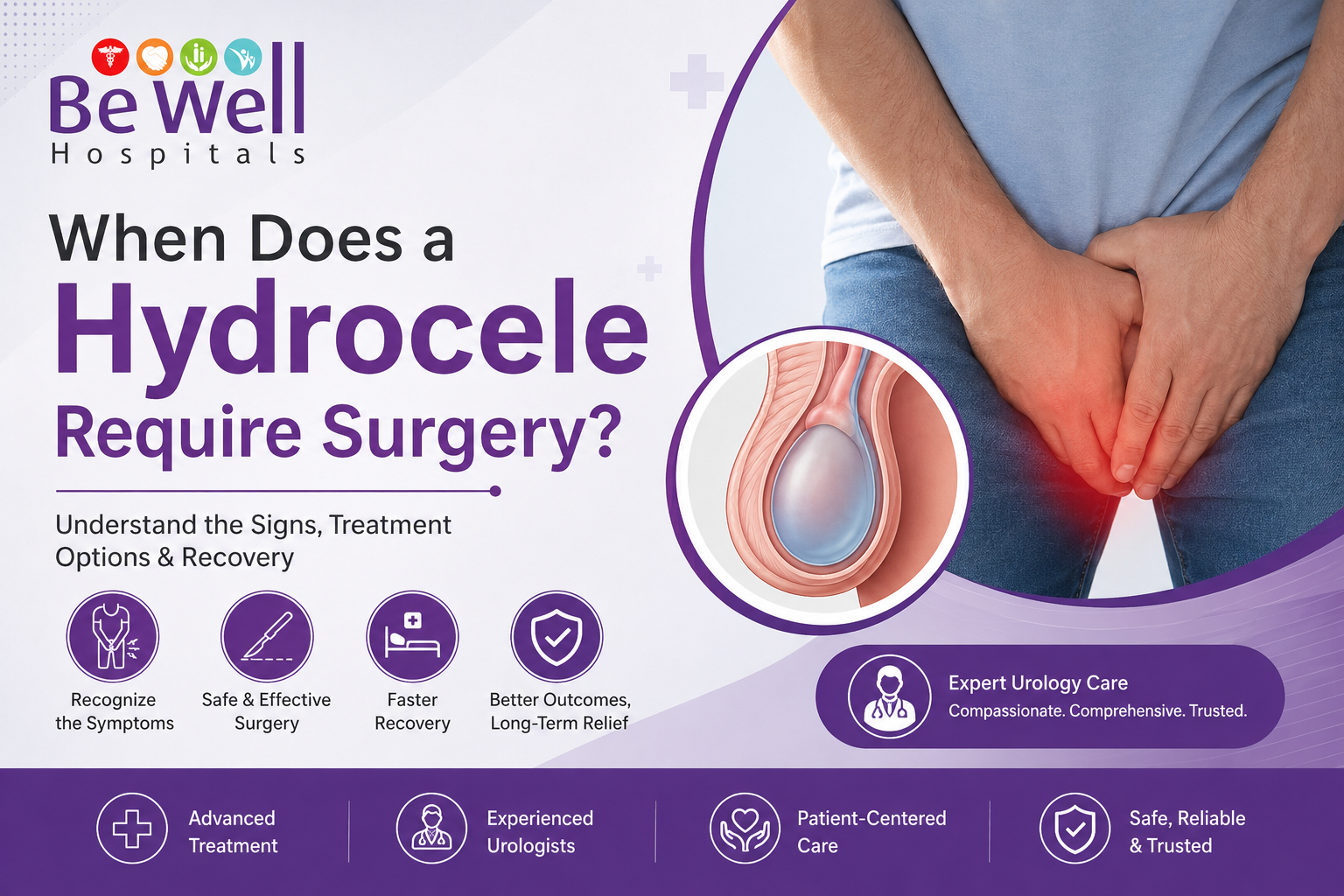
A hydrocele is one of the most common causes of painless swelling in the scrotum. While many hydroceles are harmless and may disappear on their own or remain stable without causing problems, others can become larger, uncomfortable, and affect daily life. Knowing when a hydrocele requires surgery is important to avoid complications and receive timely treatment.
If you or a loved one has been diagnosed with a hydrocele, understanding the warning signs, treatment options, and recovery process can help you make informed healthcare decisions. In this guide, we’ll explain when surgery becomes necessary, how hydrocele surgery is performed, what recovery looks like, and how to reduce the chances of recurrence.
What Is a Hydrocele and What Causes It?
A hydrocele is a condition in which fluid accumulates in the thin sac surrounding one or both testicles, leading to swelling of the scrotum. It is generally painless and harmless, but the size of the swelling can vary from mild to significant. While hydroceles are more common in newborn boys, they can also develop in adolescents and adult men. A proper diagnosis helps distinguish a hydrocele from other causes of scrotal swelling, such as hernias, infections, or tumors.
In infants, a hydrocele usually occurs when the opening between the abdomen and scrotum does not close completely before birth. Most congenital hydroceles resolve naturally within the first year of life. In adults, hydroceles may develop due to injury, inflammation, infection of the testicle or epididymis, or following surgery. In some cases, no specific cause can be identified.
Hydroceles are broadly classified into communicating and non-communicating types. A communicating hydrocele occurs when the passage between the abdomen and scrotum remains open, allowing fluid to move freely. A non-communicating hydrocele develops when the passage closes but fluid remains trapped around the testicle. Identifying the type of hydrocele is important because it helps determine whether observation or surgical treatment is the most appropriate approach.
Signs That a Hydrocele May Need Surgical Treatment
- Persistent scrotal swelling that does not improve over time or continues to increase in size.
- Large hydrocele that causes visible enlargement of the scrotum or affects appearance.
- Pain or discomfort in the scrotum, especially while walking, sitting, exercising, or standing for long periods.
- Feeling of heaviness in the scrotum, making daily activities uncomfortable.
- Difficulty with movement or physical activity due to the size of the hydrocele.
- Recurring hydrocele after previous aspiration or treatment.
- Signs of infection, such as redness, warmth, tenderness, fever, or severe pain, requiring prompt medical evaluation.
- Associated inguinal hernia, particularly in communicating hydroceles, which often requires surgical repair.
- Uncertainty in diagnosis, when imaging or examination cannot confidently rule out other conditions like a testicular tumor.
- Pressure on surrounding structures, causing discomfort or affecting nearby tissues.
- Hydrocele that persists beyond 12–18 months in infants, especially if it is communicating or shows no signs of resolving naturally.
- Impact on quality of life, including difficulty wearing certain clothing, participating in sports, or reduced confidence due to persistent swelling.
These signs do not always mean surgery is immediately necessary, but they indicate that evaluation by a urologist is important to determine whether hydrocele surgery (hydrocelectomy) is the most appropriate treatment.
When Is Surgery Recommended for a Hydrocele?
Not every hydrocele requires surgery. Many small, painless hydroceles remain stable for years and can be managed with regular observation. Your doctor may recommend a “watch and wait” approach if the swelling is mild, causes no discomfort, and does not interfere with daily activities. Regular follow-up appointments help monitor any changes in the size or symptoms of the hydrocele.
Hydrocelectomy, the surgical removal of a hydrocele, is generally recommended when the swelling becomes large, persistent, or symptomatic. Medical indications for hydrocele surgery include chronic pain or discomfort, difficulty walking or exercising, cosmetic concerns due to significant scrotal enlargement, recurrent hydroceles after previous treatment, or pressure on surrounding tissues. Surgery may also be advised when the hydrocele is associated with an inguinal hernia or other underlying conditions that require correction.
In children, surgery is usually considered if a hydrocele persists beyond 12 to 18 months of age, enlarges over time, or is identified as a communicating hydrocele. Since communicating hydroceles increase the risk of an inguinal hernia, early surgical repair is often recommended to prevent future complications.
Although hydroceles are rarely medical emergencies, prompt treatment is essential if the swelling is accompanied by sudden, severe pain, redness, fever, rapid enlargement, or signs of infection. These symptoms may indicate conditions such as testicular torsion, an incarcerated hernia, or severe inflammation, which require immediate medical evaluation. Early diagnosis and timely hydrocele treatment help relieve symptoms, prevent complications, and ensure the best possible outcome.
Learn More About Hydrocele Surgery
If your doctor recommends surgery, understanding the procedure beforehand can help you make an informed decision. Learn more about Hydrocele Surgery at Be Well Hospitals:
https://www.bewellhospitals.in/hydrocele-surgery.php
How Is Hydrocele Surgery Performed?
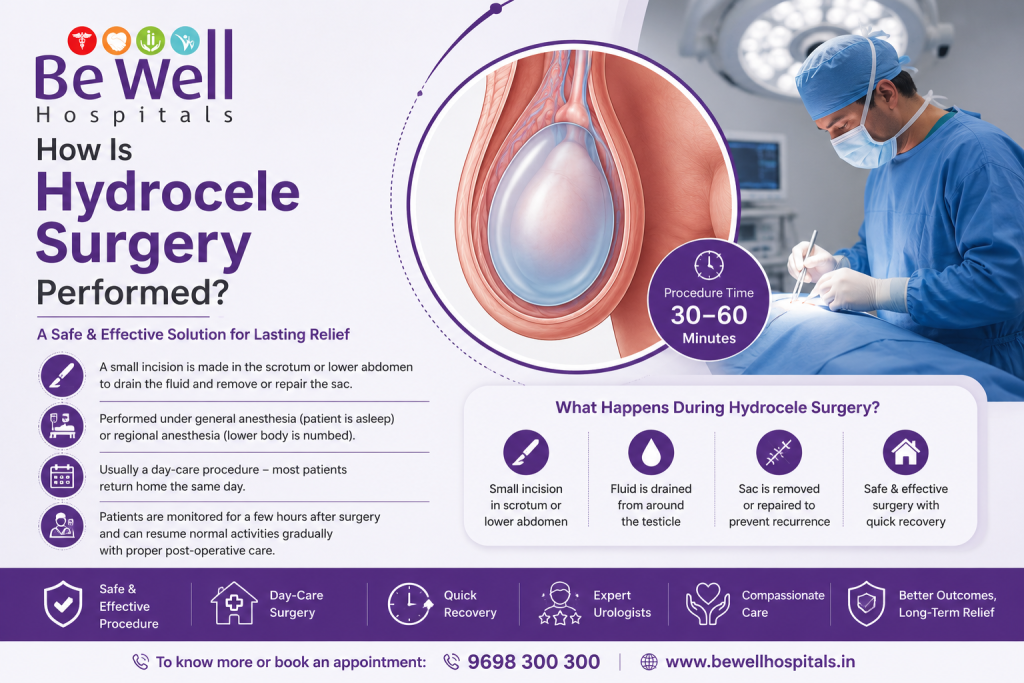
Hydrocele surgery, also known as hydrocelectomy, is a safe and effective procedure performed to remove the fluid-filled sac surrounding the testicle and prevent the hydrocele from recurring. During the procedure, the surgeon makes a small incision in the scrotum or lower abdomen, drains the accumulated fluid, and removes or repairs the sac to stop further fluid collection. The surgery is commonly performed as a day-care procedure, allowing most patients to return home on the same day.
Hydrocelectomy is carried out under either general anesthesia, where the patient is completely asleep, or regional anesthesia, which numbs the lower half of the body while the patient remains awake. The choice of anesthesia depends on factors such as the patient’s age, overall health, the size of the hydrocele, and the surgeon’s recommendation.
The procedure typically takes 30 to 60 minutes, depending on the complexity of the case.
After surgery, patients are monitored for a few hours before discharge. Most individuals recover well with proper post-operative care and can gradually resume normal activities as advised by their doctor.
Recovery After Hydrocele Surgery
Recovery after hydrocele surgery is generally smooth, with most patients returning home the same day. Mild pain, swelling, and bruising around the surgical site are common during the first few days and usually improve with prescribed medications and proper wound care. Most people can resume light daily activities within a few days, while complete recovery typically takes two to four weeks, depending on the individual’s overall health and the extent of the procedure.
Following a hydrocelectomy, it is important to keep the incision clean and dry, wear supportive underwear or a scrotal support garment, and avoid strenuous exercise, heavy lifting, cycling, and sexual activity until cleared by the doctor. Attending follow-up appointments ensures the incision is healing well and helps identify any concerns early.
Although hydrocele surgery is considered safe, like any surgical procedure, it carries a small risk of complications. These may include infection, bleeding, fluid reaccumulation (hydrocele recurrence), scrotal swelling, or delayed wound healing. Contact your doctor immediately if you experience severe pain, fever, excessive redness, persistent bleeding, or increasing swelling after surgery. Following your surgeon’s post-operative instructions can help promote a faster recovery and reduce the risk of complications.
Can a Hydrocele Return After Surgery? Reasons for Recurrence
Although hydrocelectomy is considered the most effective treatment for a hydrocele, recurrence is uncommon but still possible. The following factors may increase the risk of a hydrocele returning after surgery:
- Persistent communication between the abdomen and scrotum (communicating hydrocele), allowing fluid to collect again.
- Underlying infections or inflammation of the testicle or epididymis that continue after surgery.
- Scrotal injury or trauma following the procedure, leading to renewed fluid accumulation.
- Formation of a hematoma (blood collection) after surgery, which may contribute to swelling and fluid buildup.
- Poor wound healing or post-operative infection affecting the surgical site.
- Untreated inguinal hernia, which may allow fluid to reaccumulate in communicating hydroceles.
- Chronic medical conditions that cause fluid retention, such as liver disease, kidney disease, or heart failure.
- Lymphatic drainage problems, where fluid cannot drain properly from the scrotum.
- Returning to strenuous physical activities too soon, potentially affecting the healing process.
- Rare surgical recurrence, where fluid gradually builds up again despite a technically successful hydrocelectomy.
How to Reduce the Risk of Hydrocele Recurrence
Although recurrence after hydrocele surgery is rare, following your doctor’s instructions can significantly reduce the chances of the condition returning. Here are some important steps to support a smooth recovery:
- Follow all post-operative care instructions provided by your surgeon.
- Avoid heavy lifting and strenuous exercise until you have completely healed.
- Keep the surgical wound clean and dry to reduce the risk of infection.
- Attend all scheduled follow-up appointments after hydrocele surgery.
- Seek prompt medical attention if you experience scrotal pain, swelling, redness, fever, or any signs of infection.
- Manage underlying medical conditions that may contribute to fluid accumulation.
Regular follow-up with a urologist and timely evaluation of any new symptoms can help ensure long-term success and maintain optimal scrotal health.
Timely Treatment Leads to Better Outcomes
A hydrocele is often a harmless condition, but persistent swelling, discomfort, or a growing scrotal mass should never be ignored. Knowing when a hydrocele requires surgery can help prevent complications and improve your quality of life. Hydrocelectomy is a safe and effective treatment with a high success rate and excellent long-term outcomes when performed at the right time. If you notice changes in the size of a hydrocele, experience pain, or have concerns about your symptoms, consult a qualified urologist for a thorough evaluation. Early diagnosis, appropriate treatment, and proper post-operative care are the keys to a smooth recovery and lasting relief.
Conclusion
Although a hydrocele is usually not a life-threatening condition, persistent swelling, increasing discomfort, or difficulty performing daily activities should never be ignored. Seeking medical evaluation at the right time helps determine whether observation or surgery is the most appropriate treatment.
Hydrocelectomy remains the gold standard treatment for symptomatic hydroceles, offering excellent success rates with a low risk of recurrence when combined with proper post-operative care. Most patients experience significant relief from symptoms and can return to their normal routine within a few weeks after surgery.
If you are experiencing persistent scrotal swelling, pain, or discomfort, consult an experienced urologist for a thorough evaluation and personalized treatment plan. Early diagnosis and timely intervention can prevent complications and improve your quality of life.
To learn more about the procedure, benefits, recovery, and expert treatment options, visit Be Well Hospitals’ Hydrocele Surgery:
https://www.bewellhospitals.in/hydrocele-surgery.php
With expert care, modern surgical techniques, and appropriate follow-up, hydrocele surgery offers a safe, effective, and long-lasting solution for restoring comfort and confidence.