
Introduction
This blog explores why varicose veins are more than just a cosmetic problem, the warning signs to watch for, and when it’s important to consult a doctor.
Varicose veins are often dismissed as a cosmetic issue—something that affects appearance rather than health. However, these enlarged, twisted veins can be a sign of underlying circulation problems that deserve medical attention. While some people experience only mild discomfort, others may develop symptoms such as aching pain, swelling, heaviness in the legs, itching, or skin changes that worsen over time. Ignoring varicose veins can sometimes lead to complications, including skin ulcers, bleeding, or blood clots, especially if left untreated for long periods.
Understanding when varicose veins are harmless and when they indicate a more serious concern is key to protecting your vascular health. This blog explores why varicose veins are more than just a cosmetic problem, the warning signs to watch for, and when it’s important to consult a doctor. Early evaluation and timely treatment can not only improve comfort and mobility but also help prevent long term complications.

What Are Varicose Veins? Understanding the Basics
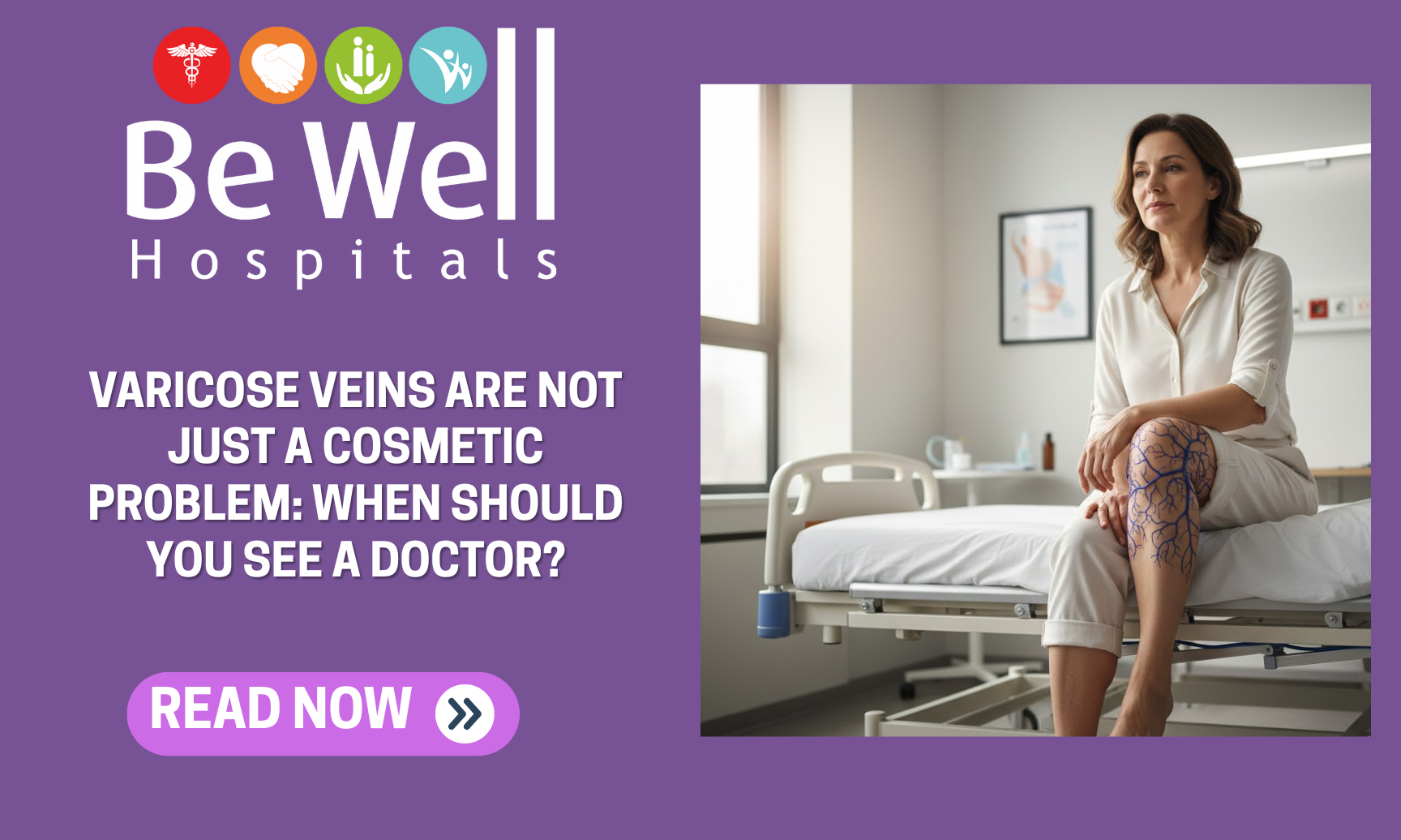
Varicose veins are enlarged, swollen, and twisted veins that commonly appear on the legs and feet. They develop when the valves inside the veins become weak or damaged, causing blood to flow backward and pool instead of moving efficiently toward the heart. This increased pressure makes the veins stretch and become visibly prominent, often appearing blue or purple. While varicose veins can affect anyone, they are more common with increasing age and prolonged periods of standing or sitting.
These veins are not just a cosmetic concern. Varicose veins often signal poor blood circulation in the lower limbs and can be associated with symptoms such as leg pain, heaviness, swelling, cramping, itching, and fatigue—especially after long hours of activity. For some people, symptoms may worsen by the end of the day or in warm weather, impacting daily comfort and mobility.
Several factors increase the risk of developing varicose veins, including genetics, pregnancy, obesity, a sedentary lifestyle, and hormonal changes. Understanding the basics of how varicose veins form and recognizing early symptoms is the first step toward timely medical care. Early diagnosis and proper management can help relieve discomfort, improve circulation, and prevent potential complications.
Common Symptoms of Varicose Veins You Shouldn’t Ignore:
- Aching or throbbing pain in the legs, especially after long periods of standing or sitting
- Heavy or tired feeling in the legs that worsens by the end of the day
- Swelling in the feet, ankles, or lower legs
- Visible, enlarged, twisted veins that appear blue or purple
- Burning, tingling, or itching around the veins
- Leg cramps or restlessness at night
- Skin discoloration or darkening around the ankles
- Dry, flaky, or itchy skin over the affected veins
- Hardening of veins or tenderness when touched
- Slow healing wounds or sores near the ankles
These symptoms may indicate poor blood circulation, chronic venous insufficiency, or progressing varicose vein disease. If symptoms persist, worsen, or interfere with daily activities, it’s important to seek medical evaluation early to prevent complications.
When Do Varicose Veins Become a Medical Problem?
Varicose veins become a medical problem when they start causing persistent symptoms or affect daily quality of life. Occasional leg discomfort may seem harmless, but ongoing pain, heaviness, swelling, or cramping can indicate poor blood circulation and chronic venous insufficiency. If these symptoms worsen after standing for long hours or do not improve with rest, it is a sign that the veins are struggling to return blood efficiently to the heart.
Skin changes around the affected area are another important warning sign. Darkening of the skin, redness, itching, dryness, or thickening around the ankles may suggest worsening vein disease. In advanced cases, the skin can become fragile, increasing the risk of wounds or venous ulcers that heal slowly and are prone to infection.
Varicose veins also require medical attention if complications develop. Sudden swelling, warmth, tenderness, or redness in the leg may indicate inflammation or a blood clot, which needs prompt evaluation. Bleeding from varicose veins, even after minor injury, should never be ignored, as these veins are under high pressure and can bleed excessively.
Seeking medical care early can prevent progression and long term complications. A doctor can assess circulation, confirm the diagnosis, and recommend appropriate treatment options to improve blood flow, relieve symptoms, and protect overall vascular health.
Risk Factors: Who Is More Likely to Develop Varicose Veins?
Varicose veins can affect people of all ages, but certain risk factors significantly increase the likelihood of developing them. Understanding these risk factors helps identify individuals who may benefit from early monitoring and preventive care. One of the most common contributors is a family history of varicose veins, as weak vein valves can be inherited. Age also plays a major role, since veins naturally lose elasticity over time, making blood pooling more likely.
Lifestyle and occupational factors further increase the risk. Jobs that require prolonged standing or sitting—such as teaching, healthcare, retail, or desk based work—can strain leg veins and impair circulation. Lack of physical activity, excess body weight, and poor posture add pressure to the lower limbs, increasing the chance of vein enlargement and discomfort.
Hormonal changes also influence vein health. Pregnancy increases blood volume and pressure on leg veins, while hormonal fluctuations during puberty, menopause, or hormone therapy can weaken vein walls. Women are therefore more likely than men to develop varicose veins. Other contributing factors include a history of blood clots, leg injuries, and smoking, which affects blood flow. Identifying these risks early allows timely intervention and helps prevent progression.
Possible Complications of Untreated Varicose Veins:
- Chronic venous insufficiency, where blood flow from the legs to the heart becomes inefficient
- Persistent leg pain and swelling that interferes with daily activities
- Skin discoloration and thickening, especially around the ankles and lower legs
- Venous eczema, causing itching, redness, dryness, and flaky skin
- Venous leg ulcers that are slow to heal and prone to infection
- Superficial thrombophlebitis, or inflammation and clotting in surface veins
- Increased risk of blood clots, including deep vein thrombosis in severe cases
- Bleeding from varicose veins, even after minor injury or scratching
- Hardening and scarring of affected veins over time
- Reduced mobility and quality of life due to ongoing discomfort and fatigue
Untreated varicose veins can worsen gradually and lead to serious vascular complications. Early diagnosis and appropriate treatment help improve circulation, relieve symptoms, and prevent long term damage.
When Should You See a Doctor for Varicose Veins?
You should consider seeing a doctor for varicose veins if you experience persistent symptoms such as leg pain, heaviness, swelling, itching, or cramping that does not improve with rest or lifestyle changes. These symptoms may indicate poor blood circulation or early chronic venous insufficiency.
Medical attention is especially important if you notice skin changes around the veins. Darkening of the skin, redness, dryness, or hardening near the ankles can signal worsening vein disease. Open sores, slow healing wounds, or sudden bleeding from varicose veins require prompt evaluation.
Seek immediate medical advice if you develop sudden leg swelling, warmth, tenderness, or redness, as these may be signs of inflammation or a blood clot. Early consultation helps confirm the diagnosis and allows timely treatment to relieve symptoms, improve blood flow, and prevent complications.

Diagnosis and Treatment Options: What to Expect
Diagnosing varicose veins begins with a detailed medical history and physical examination. Your doctor will ask about symptoms such as leg pain, swelling, heaviness, and skin changes, as well as lifestyle factors and family history. A key diagnostic test is a Doppler or duplex ultrasound, which evaluates blood flow in the veins and checks for valve damage or blood clots. This painless, non invasive test helps determine the severity of venous disease and guides treatment planning.
Treatment options for varicose veins depend on symptom severity and underlying circulation problems. In early or mild cases, conservative measures such as compression stockings, regular exercise, leg elevation, and weight management can help improve blood flow and reduce discomfort. These approaches are often recommended as first line treatment to manage symptoms and prevent progression.
For more advanced varicose veins, minimally invasive medical procedures may be advised. These include sclerotherapy, laser treatment, radiofrequency ablation, or vein closure procedures that redirect blood flow to healthier veins. Most treatments are outpatient procedures with minimal downtime. With timely diagnosis and appropriate treatment, patients can experience significant symptom relief, improved circulation, and better quality of life.
Take Varicose Veins Seriously: Early Care Makes a Difference
Varicose veins are more than a cosmetic concern—they are often a sign of underlying veins and circulation problems that should not be ignored. While mild symptoms may seem manageable at first, untreated varicose veins can gradually worsen and lead to pain, skin changes, ulcers, or blood clots. Recognising early warning signs and understanding when to seek medical attention is essential for protecting long term vascular health.
Conclusion
The good news is that modern diagnosis and treatment options for varicose veins are safe, effective, and minimally invasive. From lifestyle changes and compression therapy to advanced vein treatments, early intervention can significantly improve comfort, mobility, and quality of life. If you are experiencing persistent leg symptoms or visible changes in your veins, consulting a doctor can help prevent complications and ensure timely care. Prioritising vein health today can help you stay active, comfortable, and confident tomorrow.