

Introduction
Kidney pain can be worrying, especially when you are unsure whether it is caused by a kidney infection or kidney stones. Although both conditions can cause pain in the back or side, their symptoms, causes and treatments can be quite different.
A kidney infection may cause fever, chills, painful urination and changes in urine, while kidney stones can lead to sudden, severe pain, nausea and blood in the urine. Knowing the difference between kidney infection and kidney stone symptoms can help you seek the right care at the right time.
In this blog, learn the key differences between kidney infections and kidney stones, understand their symptoms, explore how they are diagnosed and treated, and know when kidney pain requires medical attention.
Kidney Infection vs Kidney Stones: What’s the Difference?
Although kidney infections and kidney stones can both cause kidney pain, they are two different urinary tract conditions.
A kidney infection, also called pyelonephritis, is usually caused by bacteria. It often begins as a urinary tract infection (UTI) in the bladder and can travel upward through the ureters to reach the kidneys. If left untreated, a kidney infection can become serious and may affect kidney function.
Kidney stones, on the other hand, are hard deposits that form when certain minerals and salts in the urine become concentrated and crystallise inside the kidneys. Small kidney stones may pass through the urinary tract without causing symptoms. Larger stones can become stuck in the ureter, blocking the flow of urine and causing sudden, severe pain.
The symptoms can overlap, but there are important differences. Kidney infection symptoms commonly include fever, chills, painful or frequent urination, cloudy or foul-smelling urine, and pain in the back or side.
Kidney stone symptoms often include intense, cramping pain that may move from the back or side toward the lower abdomen or groin, along with nausea, vomiting or blood in the urine.
Understanding these differences can help you recognise warning signs and seek timely medical care.
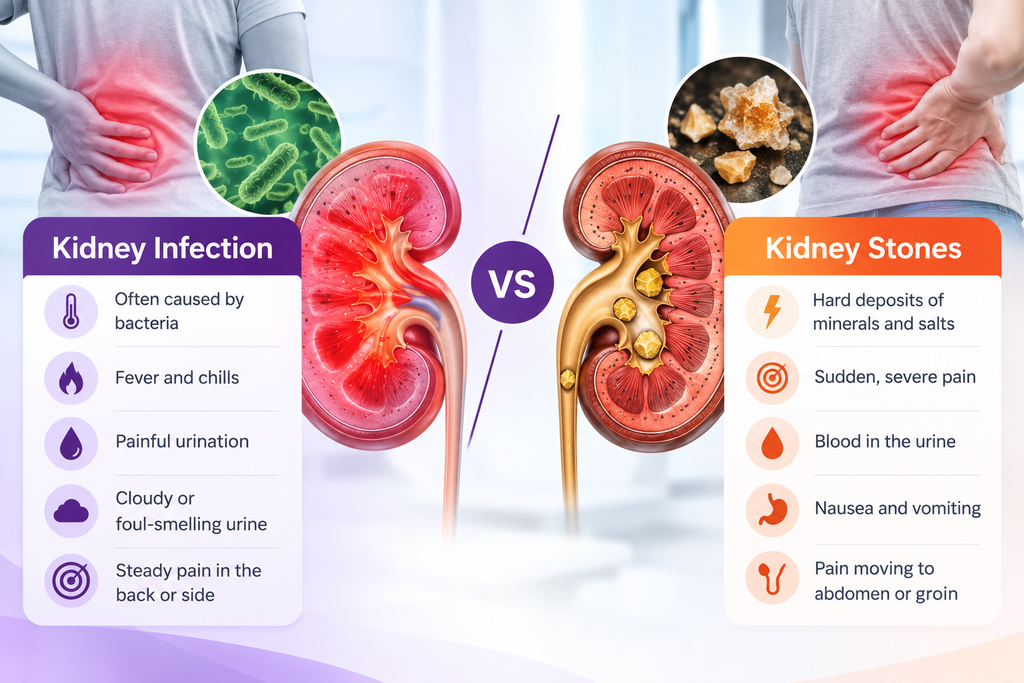
Kidney Infection Symptoms: What Should You Watch For?
1. Fever
A high fever can signal an active kidney infection requiring medical attention.
2. Chills
Chills or shivering may occur as your body fights infection.
3. Painful Urination
Burning or pain while urinating commonly indicates a urinary tract infection.
4. Frequent Urination
You may feel an increased urge to urinate frequently.
5. Cloudy Urine
Cloudy urine can occur due to bacteria, pus, or inflammation.
6. Foul-Smelling Urine
Strong-smelling urine may indicate bacteria causing a kidney infection.
7. Back or Side Pain
Pain near the kidneys commonly occurs in the lower back.
8. Nausea and Vomiting
Kidney infections can cause nausea, vomiting, and reduced appetite.
Kidney Stone Symptoms: How Do They Feel Different?
1. Sharp, Severe Pain
Kidney stones can cause sudden, intense pain in your back or side.
2. Pain Moving Downward
Kidney stone pain may move from your side toward the abdomen or groin.
3. Blood in Urine
Kidney stones can irritate urinary tissues, causing pink, red, or brown urine.
4. Nausea
Severe kidney stone pain can trigger nausea and stomach discomfort.
5. Vomiting
Intense pain from kidney stones may cause repeated vomiting and dehydration.
6. Difficulty Urinating
A kidney stone blocking urine flow can make urination difficult or painful.
Kidney Infection or Kidney Stone? Key Symptoms That Help Tell Them Apart
While kidney infection symptoms and kidney stone symptoms can overlap, certain signs can help distinguish between the two conditions.
1. Pain
A kidney infection usually causes a steady ache in the back or side. Kidney stones often cause sudden, severe, cramping pain that may come in waves.
2. Fever
Fever and chills are common signs of a kidney infection. Kidney stones usually do not cause fever unless an infection is also present.
3. Urine Changes
A kidney infection may cause cloudy, dark, or foul-smelling urine. Kidney stones can cause blood in the urine, making it appear pink, red, or brown.
4. Nausea
Both conditions can cause nausea. However, kidney stones often trigger nausea because of intense, sudden pain.
5. Urinary Symptoms
Kidney infections commonly cause burning while urinating, frequent urination, and a strong urge to urinate. Kidney stones may cause painful urination or difficulty passing urine, especially when a stone blocks the urinary tract.
Symptoms alone cannot confirm whether you have a kidney infection or kidney stone. A doctor may recommend urine tests, blood tests, or imaging to determine the exact cause.
How Are Kidney Infections and Kidney Stones Diagnosed and Treated?
Diagnosing a kidney infection or kidney stone usually begins with a review of symptoms and medical history.
A urine test can detect bacteria, blood, white blood cells, or other signs of infection or stones. Blood tests may also be recommended to check for infection, kidney function, and other abnormalities.
Imaging Tests
Imaging tests help doctors identify kidney stones, blockages, or swelling in the urinary tract. Depending on the symptoms, doctors may recommend:
- Ultrasound
- X-ray
- CT scan
These tests can help determine the location and size of a kidney stone and guide appropriate treatment.
Treatment for Kidney Infection
Kidney infection treatment usually involves antibiotics to eliminate the bacterial infection. Drinking adequate fluids and taking prescribed medicines can also support recovery.
Treatment for Kidney Stones
Treatment for kidney stones depends on their size and location. Small stones may pass naturally with fluids and pain medicines, while larger or obstructive stones may require procedures such as:
- Shock wave lithotripsy
- Ureteroscopy
- Surgical removal
Timely diagnosis helps prevent complications and protects kidney health.
When Should You See a Doctor for Kidney Pain?
Kidney pain should not always be ignored, especially when it is severe, persistent, or accompanied by other symptoms.
Seek medical attention if you experience:
- Intense or worsening pain in your back or side
- High fever
- Chills
- Repeated vomiting
- Blood in the urine
- Difficulty passing urine
- Burning urination
- Frequent urination
- Cloudy or foul-smelling urine
- Pain that does not improve
These symptoms can indicate a kidney infection, kidney stone, urinary blockage, or another urinary tract problem.
Prompt medical attention is particularly important when kidney pain occurs with fever, chills, vomiting, or difficulty urinating, as an untreated infection or urinary blockage can lead to serious complications.
A doctor can identify the underlying cause through urine tests, blood tests, and imaging scans and recommend appropriate treatment.
Avoid self-diagnosing based only on symptoms. Early diagnosis and timely treatment of kidney infections and kidney stones can help prevent complications and protect kidney health.
Kidney Pain: Know the Signs, Seek Timely Care
Kidney infections and kidney stones can cause similar symptoms, but they require different treatments. Recognising differences in kidney infection symptoms and kidney stone symptoms can help you understand when your symptoms may need medical attention.
Do not ignore severe kidney pain, fever, chills, vomiting, blood in the urine, or difficulty passing urine. These warning signs may indicate an infection, urinary blockage, or another kidney-related problem that needs prompt evaluation.
If kidney pain persists or worsens, consult a doctor for an accurate diagnosis. Urine tests, blood tests, and imaging can identify the underlying cause. Early diagnosis and appropriate treatment can prevent complications and help protect your kidney health.
Conclusion
Kidney infections and kidney stones may share some symptoms, but their causes, treatment approaches, and potential complications can be very different. Fever, chills, burning urination, and foul-smelling urine may point more towards a kidney infection, while sudden severe pain, pain radiating towards the groin, and blood in the urine can commonly occur with kidney stones.
However, symptoms alone cannot confirm the cause of kidney pain. Proper medical evaluation, including urine tests, blood tests, and imaging when required, can help identify the underlying condition.
If you experience severe or persistent kidney pain, fever, vomiting, blood in the urine, or difficulty passing urine, seek medical attention promptly. Early diagnosis and appropriate treatment can help prevent complications and protect your kidney health.