
Introduction
An anal fistula is a painful condition that usually requires surgery for complete healing. Thanks to advancements in medical technology, patients today have more treatment options than ever before, including laser fistula surgery and traditional fistula surgery.
Both procedures are designed to eliminate the fistula tract, prevent recurrent infections, and improve quality of life. However, they differ in terms of surgical technique, recovery time, pain, success rates, cost, and suitability for different types of fistulas.
If you’re wondering whether laser surgery is better than traditional fistula surgery, this comprehensive guide explains the differences between the two treatments, their benefits, limitations, and the factors that help determine which option is best for your specific condition.
What Is an Anal Fistula?
An anal fistula is a small, abnormal tunnel that develops between the inside of the anal canal and the skin surrounding the anus. It most commonly forms after an anal abscess fails to heal completely. When an infected gland inside the anal canal creates an abscess, the infection can leave behind a passage connecting the anal canal to the skin.
An anal fistula rarely heals on its own and often causes recurring infections, pain, and discharge. Without proper treatment, it can significantly affect daily activities and quality of life. Early diagnosis and appropriate surgical treatment are essential to prevent complications and achieve complete healing.
Common Causes of an Anal Fistula
Several conditions can lead to the formation of an anal fistula. The most common causes include:
- Anal Abscess: The leading cause of anal fistulas. An infected anal gland forms an abscess that may later develop into a fistula.
- Inflammatory Bowel Disease (IBD): Conditions such as Crohn’s disease increase the risk of fistula formation.
- Chronic Infections: Repeated infections around the anal region may create abnormal tunnels.
- Trauma or Injury: Injury to the anal area or complications following surgery can result in fistula formation.
- Radiation Therapy: Previous radiation treatment to the pelvic region may damage surrounding tissues.
- Other Medical Conditions: Rare conditions such as tuberculosis, cancer, or certain infections may also contribute to anal fistulas.
Symptoms of an Anal Fistula
The symptoms of an anal fistula can vary depending on the severity of the infection and the location of the fistula. Common signs include:
- Persistent pain around the anus, especially while sitting or during bowel movements
- Swelling, redness, or tenderness near the anal opening
- Pus or foul-smelling discharge from an opening near the anus
- Bleeding around the affected area
- Skin irritation and itching around the anus
- Recurrent anal abscesses
- Fever and fatigue if the infection becomes severe
- Difficulty sitting comfortably because of continuous pain
These symptoms should never be ignored. Prompt medical evaluation and early treatment can prevent recurrent infections and long-term complications.
Why Surgery Is the Most Effective Treatment for an Anal Fistula
Unlike many other infections, an anal fistula does not usually heal on its own. The fistula tract continues to harbor bacteria, leading to repeated infections, abscess formation, and ongoing discomfort.
Although antibiotics may temporarily reduce inflammation or control infection, they cannot eliminate the fistula tract itself. As a result, symptoms often return once the medication is stopped.
Surgery remains the most effective treatment because it removes or seals the fistula while preserving normal bowel function whenever possible. The appropriate surgical approach depends on several factors, including:
- The type of fistula
- The location of the fistula
- Whether the fistula involves the anal sphincter muscles
- The complexity of the fistula tract
- The patient’s overall health
Depending on these factors, your colorectal surgeon may recommend either laser fistula surgery or traditional fistula surgery.
Early surgical intervention offers several important benefits:
- Eliminates the source of chronic infection
- Reduces the risk of recurrent abscesses
- Relieves pain and persistent discharge
- Improves quality of life
- Reduces the chances of long-term complications
- Promotes faster healing when treated at an early stage
Choosing the right treatment begins with a thorough clinical evaluation by an experienced colorectal surgeon who can recommend the safest and most effective procedure based on your individual condition.
What Is Laser Fistula Surgery?
Laser fistula surgery is a modern, minimally invasive treatment for anal fistulas. Instead of making large surgical incisions, the procedure uses a specialized laser fiber to close the fistula tract from the inside.
During the procedure, the surgeon first cleans the infected fistula tract. A thin laser probe is then inserted into the tract, where controlled laser energy is delivered to seal it. The heat generated by the laser destroys the unhealthy tissue while preserving the surrounding healthy tissue and anal sphincter muscles.
Because there are no large cuts, laser fistula surgery generally causes less pain, minimal bleeding, and faster healing. Many patients are discharged on the same day and can return to their normal routine much sooner than with conventional surgery.
Laser surgery is best suited for carefully selected patients and should always be performed by an experienced colorectal surgeon after a thorough evaluation.
Benefits of Laser Fistula Surgery
Laser fistula surgery offers several advantages over conventional surgical methods for suitable patients.
Minimally Invasive Procedure
The procedure is performed without large surgical incisions, resulting in less trauma to the surrounding tissues.
Less Post-Operative Pain
Since there is minimal tissue damage, patients usually experience significantly less pain after surgery.
Minimal Bleeding
Laser energy seals blood vessels during treatment, reducing bleeding both during and after the procedure.
Faster Recovery
Most patients recover more quickly and can resume their daily activities sooner than those undergoing traditional surgery.
Shorter Hospital Stay
Laser fistula surgery is commonly performed as a day-care procedure, allowing patients to return home the same day.
Better Preservation of Anal Sphincter Muscles
The laser targets only the fistula tract while preserving the surrounding muscles, helping reduce the risk of bowel incontinence.
Lower Risk of Wound Infection
Smaller treatment areas reduce the likelihood of wound infections and simplify post-operative wound care.
Minimal Scarring
Because there are no large surgical wounds, cosmetic outcomes are generally better with less visible scarring.
Improved Patient Comfort
Reduced pain, faster healing, and shorter recovery make laser surgery a preferred option for many eligible patients.
Limitations of Laser Fistula Surgery
Although laser surgery has many benefits, it is not suitable for every patient.
Not Suitable for All Types of Fistulas
Highly complex, branching, or multiple fistulas may require conventional surgery instead.
Success Depends on Proper Patient Selection
Laser treatment works best when the fistula anatomy is appropriate for this technique.
Higher Risk of Recurrence in Complex Cases
Complex fistulas may recur if laser surgery is performed in patients who are not ideal candidates.
Requires Specialized Equipment
Not every hospital has advanced laser equipment or trained colorectal specialists.
Higher Treatment Cost
Laser fistula surgery is generally more expensive than traditional surgery because of the advanced technology involved.
Additional Procedures May Be Needed
Some patients may require a second procedure if the fistula does not heal completely.
Not Ideal for Severe Active Infections
Patients with extensive infections or large abscesses may first require drainage or other surgical management before laser treatment.
What Is Traditional Fistula Surgery?
Traditional fistula surgery has been the standard treatment for anal fistulas for many years and continues to provide excellent long-term results. The procedure chosen depends on the fistula’s location, complexity, and involvement of the anal sphincter muscles.
Unlike laser treatment, traditional surgery may involve opening, removing, or reconstructing the fistula tract to allow complete healing while preserving bowel control whenever possible.
Common Types of Traditional Fistula Surgery
Fistulotomy
A fistulotomy involves opening the entire fistula tract so it can heal naturally from the inside out. It is considered the gold standard for many simple anal fistulas.
Fistulectomy
In a fistulectomy, the entire fistula tract is surgically removed. This approach may be recommended in selected cases depending on the fistula’s anatomy.
Seton Placement
A seton is a surgical thread placed through the fistula tract to gradually drain infection and promote healing while protecting the anal sphincter muscles. It is commonly used for complex fistulas.
Advancement Flap Procedure
For fistulas involving a significant portion of the anal sphincter, an advancement flap may be used to close the internal opening while preserving muscle function.
Benefits of Traditional Fistula Surgery
Traditional surgery remains the preferred treatment for many patients because of its proven effectiveness.
- High long-term success rate
- Excellent treatment option for complex fistulas
- Lower recurrence rates for many complicated cases
- Widely available in most hospitals
- More affordable than laser surgery
- Supported by decades of clinical experience
- Multiple surgical techniques allow treatment to be tailored to each patient
Recovery After Traditional Fistula Surgery
Recovery following traditional surgery usually takes several weeks and depends on the type of procedure performed.
During recovery, patients are advised to:
- Keep the surgical area clean and dry.
- Take prescribed medications as directed.
- Attend regular follow-up appointments.
- Maintain good bowel habits to avoid constipation.
- Follow wound-care instructions carefully.
- Eat a high-fiber diet and drink plenty of water.
Although healing may take longer than laser surgery, traditional procedures continue to provide excellent long-term outcomes, particularly for patients with complex anal fistulas.
Laser Surgery vs Traditional Fistula Surgery: Which Is Better?
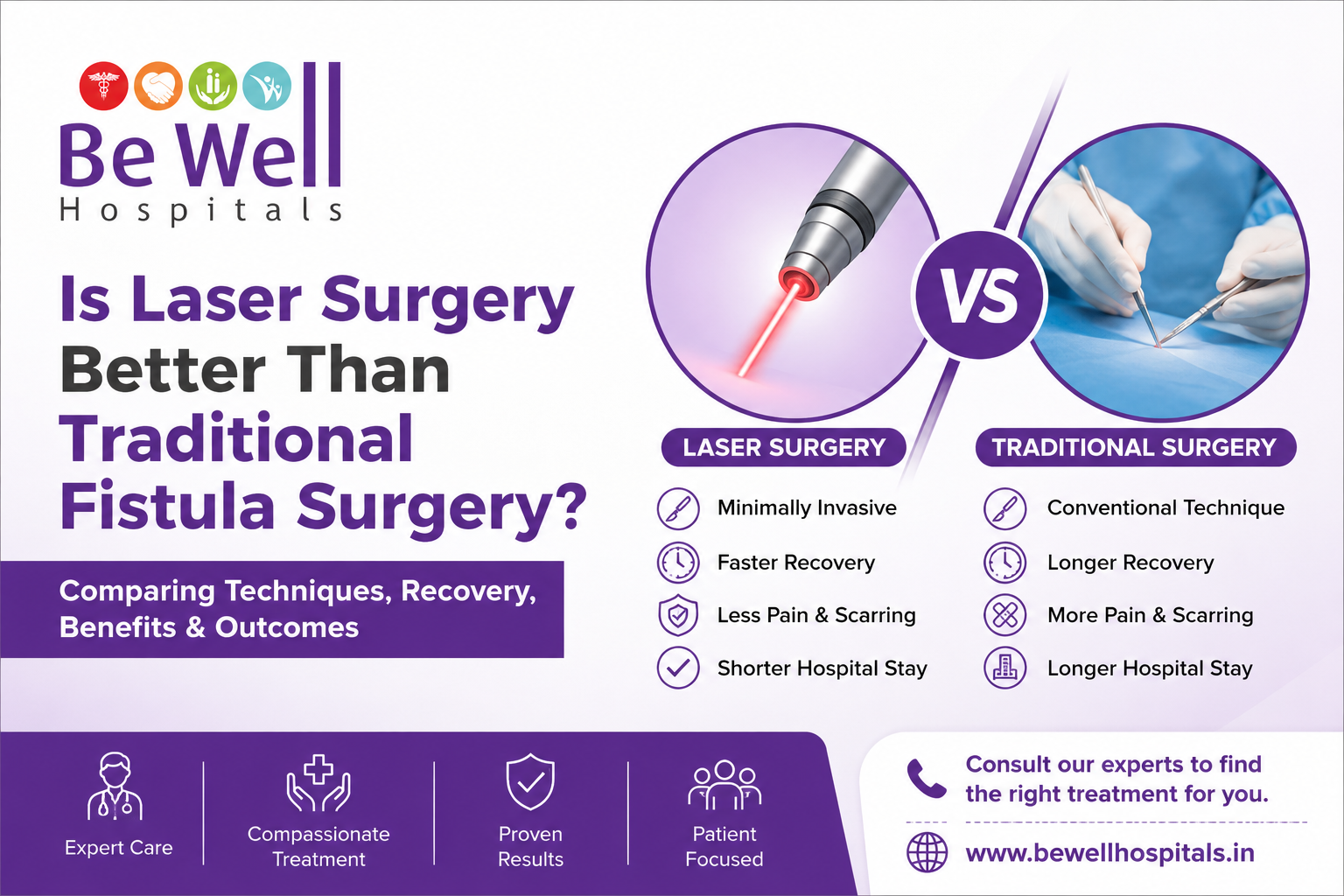
Choosing between laser fistula surgery and traditional fistula surgery depends on several factors, including the type, location, and complexity of the anal fistula. While laser surgery offers a minimally invasive approach with faster recovery, traditional surgery remains the gold standard for many complex fistulas because of its proven long-term success.
Rather than asking which treatment is universally better, it is more important to determine which option is most appropriate for your specific condition. A thorough evaluation by an experienced colorectal surgeon is essential to achieve the best possible outcome.
Pain and Recovery
One of the biggest advantages of laser fistula surgery is reduced post-operative pain. Since the procedure does not involve large surgical incisions or extensive tissue removal, patients generally experience:
- Less pain after surgery
- Minimal bleeding
- Faster wound healing
- Earlier return to daily activities
- Greater overall comfort during recovery
Traditional fistula surgery may involve a longer recovery period, especially if the wound is left open to heal naturally. Proper wound care, pain management, and regular follow-up appointments are essential for successful healing.
Success Rate and Risk of Recurrence
Traditional fistula surgery has consistently demonstrated excellent long-term success rates, particularly for simple anal fistulas. Decades of clinical experience support its effectiveness.
Laser fistula surgery also provides excellent results when patients are carefully selected. However, its success depends on several factors, including:
- The anatomy of the fistula
- The complexity of the tract
- The surgeon’s expertise
- Proper patient selection
Complex or branching fistulas may have a higher chance of recurrence after laser treatment, making conventional surgery a better option in many such cases.
Hospital Stay and Healing Time
Laser fistula surgery is commonly performed as a day-care procedure, allowing many patients to return home on the same day.
Benefits include:
- Shorter hospital stay
- Faster wound healing
- Less tissue damage
- Minimal scarring
- Quicker return to work
Traditional surgery may require a slightly longer hospital stay depending on the complexity of the procedure. Recovery usually involves regular wound dressings and follow-up visits, although most patients heal well with appropriate post-operative care.
Anal Sphincter Preservation
Protecting the anal sphincter muscles is one of the primary goals of fistula treatment.
Laser surgery preserves the surrounding muscles by targeting only the fistula tract, helping reduce the risk of bowel incontinence.
Traditional surgical techniques are also designed to preserve sphincter function whenever possible. The choice of procedure depends on the fistula’s location and complexity to ensure the safest outcome.
Cost and Availability
Laser fistula surgery generally costs more because it requires:
- Specialized laser equipment
- Advanced surgical technology
- Experienced colorectal surgeons
Additionally, laser treatment may not be available at every healthcare facility.
Traditional fistula surgery is:
- Widely available
- More affordable
- Supported by experienced surgeons in most hospitals
- Suitable for a broader range of fistula types
Patients should discuss treatment costs, hospital facilities, and insurance coverage with their healthcare provider before making a decision.
Laser Surgery vs Traditional Fistula Surgery: Comparison Table
| Feature | Laser Fistula Surgery | Traditional Fistula Surgery |
|---|---|---|
| Procedure | Minimally invasive | Conventional surgery |
| Surgical Incisions | No large incisions | Surgical incision required |
| Pain After Surgery | Less | Moderate |
| Bleeding | Minimal | Moderate |
| Hospital Stay | Usually same day | May require 1–2 days |
| Recovery Time | Faster | Longer |
| Wound Care | Minimal | More extensive |
| Scarring | Minimal | More noticeable |
| Suitable For | Selected simple fistulas | Simple and complex fistulas |
| Risk of Incontinence | Lower in suitable cases | Depends on fistula type and procedure |
| Cost | Higher | More affordable |
| Availability | Limited to specialized centres | Widely available |
| Long-Term Success | Excellent in selected patients | Excellent, especially for complex fistulas |
Which Treatment Should You Choose?
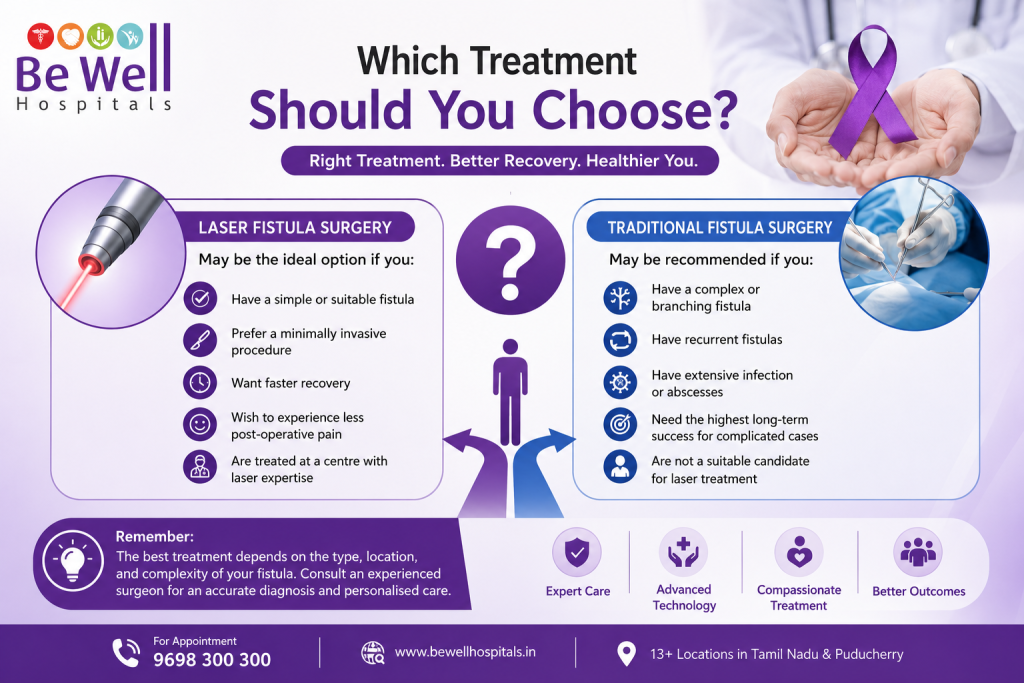
There is no single treatment that is best for every patient.
Laser fistula surgery may be the ideal option if you:
- Have a simple or suitable fistula
- Prefer a minimally invasive procedure
- Want faster recovery
- Wish to experience less post-operative pain
- Are treated at a centre with laser expertise
Traditional fistula surgery may be recommended if you:
- Have a complex or branching fistula
- Have recurrent fistulas
- Have extensive infection or abscesses
- Need the highest long-term success for complicated cases
- Are not a suitable candidate for laser treatment
Your colorectal surgeon will evaluate your condition using clinical examination and imaging studies before recommending the most appropriate treatment. Making an informed decision with your surgeon ensures the safest procedure, the best healing outcome, and the lowest risk of recurrence.
Factors to Consider Before Choosing Fistula Surgery
Every anal fistula is different, and the most appropriate treatment depends on several medical and personal factors. Before recommending laser or traditional surgery, your colorectal surgeon will carefully evaluate your condition to ensure the safest and most effective treatment.
1. Type and Complexity of the Fistula
Simple fistulas can often be treated successfully with minimally invasive procedures, including laser surgery. However, complex, branching, or recurrent fistulas may require traditional surgical techniques to achieve complete healing.
2. Location of the Fistula
The position of the fistula in relation to the anal sphincter muscles plays a crucial role in selecting the most suitable surgical approach. Preserving sphincter function is essential to maintain normal bowel control.
3. Severity of Infection
If there is an active infection or a large abscess, the infection may need to be drained before definitive fistula surgery can be safely performed.
4. Overall Health
Medical conditions such as diabetes, inflammatory bowel disease, immune disorders, or poor wound healing can influence the choice of treatment and recovery time.
5. Previous Fistula Surgeries
Patients who have experienced recurrent fistulas or unsuccessful previous surgeries may require a different surgical technique to improve long-term outcomes.
6. Risk of Recurrence
The chosen treatment should provide the highest likelihood of complete healing while minimizing the risk of the fistula returning.
7. Recovery Time and Lifestyle
Patients who need to return to work or daily activities quickly may benefit from minimally invasive procedures, provided they are suitable candidates.
8. Surgeon’s Expertise
The experience of the colorectal surgeon plays a significant role in treatment success. Choosing a surgeon experienced in both laser and traditional fistula surgery helps ensure the best possible outcome.
9. Availability of Advanced Technology
Laser fistula surgery requires specialized equipment and trained surgeons, which may not be available at every hospital. Traditional surgery remains widely available across most healthcare facilities.
10. Cost of Treatment
Treatment costs vary depending on the surgical technique, hospital, surgeon’s expertise, and technology used. Patients should discuss costs and insurance coverage before deciding on a treatment plan.
Frequently Asked Questions (FAQs)
Is laser fistula surgery better than traditional fistula surgery?
Laser fistula surgery offers benefits such as less pain, minimal bleeding, and faster recovery. However, traditional fistula surgery remains the preferred treatment for many complex fistulas due to its proven long-term success. The best option depends on the type and complexity of your fistula.
Is laser fistula surgery painful?
Most patients experience significantly less pain after laser surgery compared to conventional surgery because the procedure is minimally invasive and involves less tissue damage.
Can every anal fistula be treated with laser surgery?
No. Laser surgery is not suitable for all fistulas. Complex, branching, or recurrent fistulas often require traditional surgical treatment.
Which surgery has a higher success rate?
Traditional fistula surgery has consistently high success rates, particularly for complex fistulas. Laser surgery also provides excellent results when performed on carefully selected patients.
How long does recovery take after fistula surgery?
Recovery varies depending on the procedure. Patients undergoing laser surgery often return to normal activities within a few days, while recovery after traditional surgery may take several weeks.
Is hospitalization required?
Many laser fistula surgeries are performed as day-care procedures. Traditional surgery may require a slightly longer hospital stay depending on the complexity of the operation.
Is laser fistula surgery more expensive?
Yes. Laser surgery generally costs more because it requires advanced equipment and specialized surgical expertise.
Can an anal fistula heal without surgery?
In most cases, no. An anal fistula rarely heals on its own. Without proper treatment, it can lead to recurrent infections, abscesses, and ongoing discomfort.
Which doctor should I consult for fistula treatment?
You should consult a colorectal surgeon or a general surgeon experienced in treating anal fistulas. They can evaluate your condition and recommend the most suitable treatment.
Conclusion
Both laser fistula surgery and traditional fistula surgery are effective treatments for anal fistulas, but the right choice depends on your individual condition. Laser surgery offers the advantages of a minimally invasive procedure, reduced pain, minimal scarring, shorter hospital stays, and faster recovery. Traditional surgery, however, remains the gold standard for many complex fistulas because of its excellent long-term success and lower recurrence rates.
Rather than choosing a treatment based solely on convenience, it is important to undergo a thorough evaluation by an experienced colorectal surgeon. Factors such as the type, location, and complexity of the fistula, along with your overall health and treatment goals, will determine the most appropriate surgical approach.
If you are experiencing symptoms such as persistent pain, swelling, discharge, or recurrent infections around the anal area, seek medical attention promptly. Early diagnosis and timely treatment can help prevent complications, improve healing, and restore your quality of life.