

Introduction
Headaches can disrupt daily life, but not all headaches are the same. A sinus headache and a migraine are often confused due to overlapping symptoms, leading to incorrect self-diagnosis and ineffective treatment. While sinus headaches are typically linked to sinus infections and pressure around the face, migraines are a neurological condition marked by intense, throbbing pain and additional symptoms like nausea or sensitivity to light. Understanding the difference between sinus headache vs migraine is essential for choosing the right treatment and finding lasting relief. In this blog, we break down how each type of headache feels, their key symptoms, causes, and when to seek medical attention for proper diagnosis and care.
What Is a Sinus Headache? Causes and Triggers Explained
A sinus headache is a type of headache caused by inflammation or infection in the sinuses, often linked to conditions like sinusitis. It typically presents as a deep, constant pressure around the forehead, cheeks, or bridge of the nose. The pain may worsen when bending forward or lying down, making daily activities uncomfortable. Unlike other headaches, sinus headaches are usually accompanied by nasal congestion, facial tenderness, and a feeling of fullness in the ears.
The most common cause of a sinus headache is a sinus infection, which can be triggered by viral, bacterial, or allergic factors. When the sinus cavities become blocked, mucus builds up, leading to increased pressure and pain. Seasonal allergies, the common cold, and respiratory infections are frequent contributors. Environmental irritants like pollution or strong odors can also worsen symptoms.
Common sinus headache triggers include weather changes, allergens such as dust or pollen, and untreated nasal congestion. Identifying these triggers and seeking timely treatment can help reduce the frequency and severity of sinus headaches while improving overall sinus health.
Common Symptoms of Migraine
- Intense, throbbing headache (often on one side of the head)
- Sensitivity to light, sound, and sometimes smells
- Nausea and vomiting
- Blurred vision or visual disturbances
- Dizziness and fatigue
- Difficulty concentrating or brain fog
Migraine Triggers to Watch For
- Stress and anxiety
- Hormonal changes (especially in women)
- Lack of sleep or irregular sleep patterns
- Certain foods (chocolate, caffeine, processed foods, aged cheese)
- Dehydration or skipping meals
- Bright lights, loud noises, or strong smells
- Weather changes and screen overexposure
Early Warning Signs (Prodrome & Aura)
- Mood changes (irritability or low mood)
- Neck stiffness and food cravings
- Increased sensitivity to light or sound before pain begins
- Visual aura (flashing lights, zigzag lines, blind spots)
- Tingling or numbness in the face or hands
Recognizing these migraine warning signs and triggers early can help in timely management and prevention of severe migraine attacks.
Key Differences in Symptoms of Sinus Headache vs Migraine
1. Type of Pain
A sinus headache usually causes a constant, dull pressure or heaviness in the face, especially around the cheeks, forehead, and nose. In contrast, a migraine is characterized by intense, throbbing or pulsating pain, often on one side of the head. Migraine pain tends to build in severity and can become debilitating, while sinus headache pain feels more like persistent facial pressure linked to sinus inflammation or congestion.
2. Location of Pain
Sinus headache pain is typically centered around the sinus areas—forehead, cheekbones, and around the eyes—and may radiate to the upper jaw or teeth. Migraine pain, however, commonly affects one side of the head, particularly the temples or behind the eyes. While migraines can shift sides or affect both sides, the location is less tied to facial sinuses and more to neurological pathways.
3. Associated Symptoms
Sinus headaches are often accompanied by nasal congestion, facial tenderness, thick nasal discharge, and sometimes fever, especially if caused by infection. Migraines, on the other hand, are linked with nausea, vomiting, and heightened sensitivity to light, sound, and smells. These neurological symptoms are key indicators that distinguish migraines from sinus-related headaches, which are more focused on respiratory and facial discomfort.
4. Triggers
Sinus headaches are usually triggered by sinus infections, allergies, or colds that cause inflammation and blockage in the sinus cavities. Environmental irritants like dust or pollution may worsen symptoms. Migraines are triggered by a broader range of factors, including stress, hormonal changes, certain foods, dehydration, and lack of sleep. Identifying triggers is essential, as migraine triggers are often lifestyle-related rather than infection-based.
5. Duration and Pattern
A sinus headache often lasts as long as the underlying sinus infection or congestion persists and may improve with decongestants or antibiotics if bacterial. Migraines occur in episodes that can last from a few hours to several days and may recur periodically. Unlike sinus headaches, migraines often follow a pattern and may include warning signs before the pain begins, making them more cyclical in nature.
6. Response to Movement
Pain from a sinus headache typically worsens when bending forward, lying down, or making sudden head movements due to increased sinus pressure. In contrast, migraine pain may intensify with physical activity such as walking or climbing stairs, but not necessarily with changes in head position. This difference helps in identifying the underlying cause, as sinus-related pain is more sensitive to positional changes.
7. Response to Treatment
Sinus headaches usually respond well to treatments like steam inhalation, decongestants, antihistamines, or treating the underlying infection. Migraines require a different approach, including pain relievers, triptans, lifestyle modifications, and sometimes preventive medications. Misidentifying a migraine as a sinus headache can delay effective treatment, making it important to recognize these differences for proper management and long-term relief.
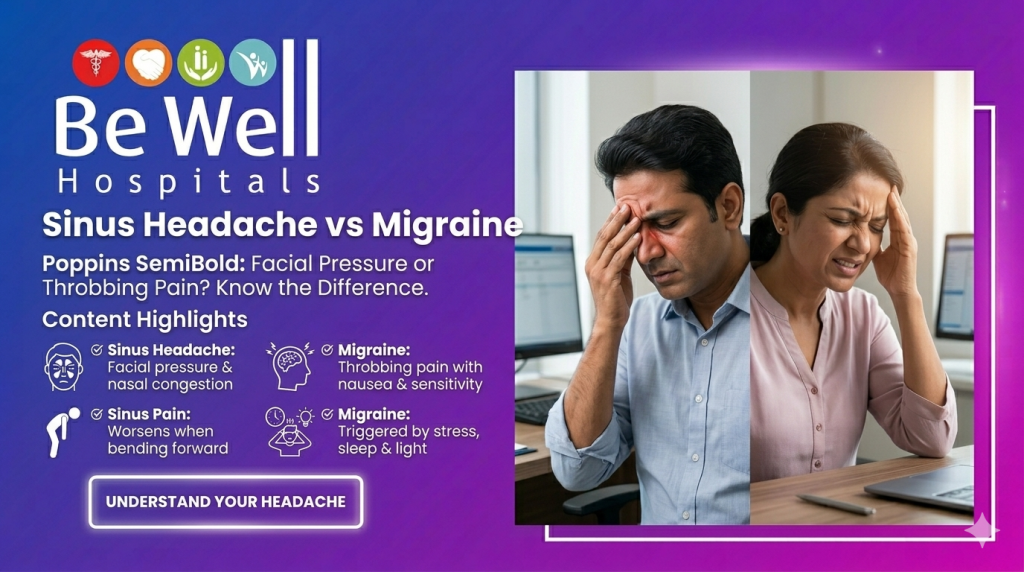
Pain Location and Sensation: How Each Headache Feels
Understanding pain location and sensation is key to distinguishing between a sinus headache and a migraine. A sinus headache typically causes a deep, constant pressure in the forehead, cheeks, around the eyes, and even the upper jaw. This facial pain often feels heavy and congested, as if the sinuses are “full,” and may worsen when bending forward or lying down. The discomfort is usually spread across both sides of the face and is closely linked to sinus inflammation or infection.
In contrast, a migraine produces a throbbing or pulsating pain, often concentrated on one side of the head, such as the temples or behind one eye. The sensation can intensify with movement, physical activity, or exposure to light and sound. Unlike sinus headaches, migraine pain is more neurological and can shift in location. Recognizing these differences in headache pain helps in accurate diagnosis and choosing the right treatment for lasting relief.
Associated Symptoms: Nasal Congestion vs Nausea and Aura
Associated symptoms play a crucial role in telling apart a sinus headache from a migraine, especially when the pain feels similar. A sinus headache is commonly linked to nasal and respiratory symptoms such as blocked nose, facial tenderness, thick nasal discharge, and a feeling of pressure in the ears. These symptoms are often accompanied by signs of infection or allergies, including mild fever, fatigue, and postnasal drip, making the condition more localized to the sinus passages.
In contrast, a migraine is a neurological condition with a very different set of associated symptoms. People with migraines often experience nausea, vomiting, and extreme sensitivity to light, sound, and even smells. These symptoms can significantly interfere with daily activities and may worsen with movement or physical exertion. Unlike sinus headaches, migraines do not typically involve nasal congestion or sinus pressure.
Another key distinguishing feature is the presence of aura in some migraine cases. Aura refers to temporary neurological disturbances that occur before or during a migraine attack, such as flashing lights, zigzag lines, blind spots, or tingling sensations in the face or hands. Recognizing these associated symptoms is essential for accurate diagnosis and effective migraine vs sinus headache management.
Why Sinus Headaches Are Often Misdiagnosed
1. Overlapping Symptoms with Migraine
Sinus headaches and migraines share several similar symptoms, which often leads to confusion and misdiagnosis. Both can cause pain around the forehead, eyes, and face, making it difficult for individuals to distinguish between the two. Additionally, migraines can sometimes present with nasal congestion or watery eyes, which are typically associated with sinus issues. Because of this overlap, many people assume they have a sinus headache when they are actually experiencing a migraine, delaying appropriate treatment and effective pain relief.
2. Self-Diagnosis and Misinterpretation of Symptoms
Many people tend to self-diagnose headaches based on common assumptions rather than medical evaluation. Facial pain or pressure is often immediately linked to sinus problems, especially during a cold or allergy season. However, without proper diagnosis, it is easy to overlook migraine-specific symptoms like sensitivity to light or nausea. This misinterpretation leads individuals to rely on over-the-counter sinus medications, which may not address the actual cause, resulting in persistent or worsening symptoms over time.
3. Presence of Nasal Symptoms in Migraines
One of the lesser-known facts is that migraines can also cause nasal symptoms such as congestion, runny nose, or watery eyes. This occurs due to the involvement of certain nerve pathways during a migraine attack. Because these symptoms mimic those of sinus infections, they can easily mislead both patients and sometimes even doctors. As a result, migraines are frequently mistaken for sinus headaches, leading to incorrect treatment plans and prolonged discomfort.
4. Lack of Awareness About Migraine Variations
Migraines are often misunderstood as just severe headaches, but they are actually a complex neurological condition with various forms and symptoms. Not everyone experiences the classic throbbing pain or aura, which can make diagnosis more challenging. Some migraines present primarily as facial pain or pressure, closely resembling sinus headaches. This lack of awareness about the diverse ways migraines can manifest contributes significantly to frequent misdiagnosis and under-treatment.
5. Temporary Relief from Sinus Medications
In some cases, people may experience temporary relief after taking sinus medications such as decongestants or antihistamines. This can reinforce the belief that the headache is sinus-related, even when it is actually a migraine. The relief may occur due to placebo effects or mild symptom overlap rather than true treatment of the underlying condition. This misleading response can delay accurate diagnosis and prevent individuals from seeking appropriate migraine-specific therapies.
6. Inadequate Medical Evaluation
A proper diagnosis of sinus headache versus migraine often requires a detailed medical history, symptom analysis, and sometimes imaging studies. However, not all patients undergo thorough evaluation, especially if symptoms appear mild or recurring. Quick consultations or assumptions based on limited symptoms can lead to incorrect labeling of the headache type. Without careful assessment, the root cause may be missed, resulting in repeated episodes and ineffective long-term management.
7. Influence of Seasonal Allergies and Infections
During allergy seasons or when respiratory infections are common, headaches accompanied by nasal symptoms are often automatically attributed to sinus issues. This seasonal context can bias both patients and doctors toward diagnosing sinus headaches. However, migraines can also be triggered by environmental changes, including weather shifts and allergens. This overlap in timing further complicates accurate identification, increasing the chances of misdiagnosis and inappropriate treatment approaches.
Managing Sinus Headaches and Migraines Effectively
Effective treatment for sinus headaches and migraines depends on identifying the correct cause of pain. For sinus headaches, the focus is on relieving sinus pressure and treating underlying inflammation or infection. Common remedies include steam inhalation, saline nasal sprays, decongestants, and antihistamines to reduce congestion. If a bacterial infection is present, a doctor may prescribe antibiotics. Staying hydrated, using warm compresses, and avoiding allergens can also help ease sinus headache symptoms and support faster recovery.
Migraine treatment, on the other hand, requires a more targeted neurological approach. Over-the-counter pain relievers may help in mild cases, but moderate to severe migraines often need prescription medications such as triptans or preventive therapies. Lifestyle management plays a crucial role, including maintaining regular sleep patterns, managing stress, staying hydrated, and avoiding known migraine triggers like certain foods or excessive screen time.
Accurate diagnosis is key to choosing the right treatment plan. Misidentifying a migraine as a sinus headache can delay relief and worsen symptoms over time. Consulting a doctor ensures proper evaluation and personalized care, helping individuals manage headaches effectively and improve their overall quality of life.
Conclusion
Understanding the difference between a sinus headache and a migraine is essential for accurate diagnosis and effective treatment. While both may cause discomfort around the head and face, their underlying causes, symptoms, and management approaches are very different. Recognizing key signs—such as nasal congestion in sinus headaches or nausea and sensitivity in migraines—can help you take the right steps toward relief. Avoiding self-diagnosis and seeking medical advice ensures better outcomes and prevents recurring pain. With the right knowledge and timely care, you can manage headaches more effectively and improve your overall quality of life.